In today’s visually driven digital era, one question inspires every creator, filmmaker, and studio: how can ideas be transformed into lifelike motion that audiences can see, feel, and experience? As storytelling evolves and expectations rise, traditional visuals alone no longer suffice—brands, educators, designers, and entertainment industries now seek depth, realism, and immersion that only 3D animation can deliver.
That’s where modern 3D animation software becomes the creative powerhouse. These platforms don’t just design models; they sculpt emotions, simulate physics, add lifelike textures, and bring imagination into motion with cinematic accuracy. From movies and gaming to AR/VR, architecture, education, and advertising—3D tools unlock worlds limited only by creativity.
In this blog, we explore the Top 15 3D Animation Software powering today’s most stunning visuals.
What is 3D Animation?
The 3D animation process involves producing dynamic images in a three dimensional computerized space with the help of specialized software. In contrast to the 2D animation, which is flat, the 3D animation introduces depth, realistic textures, lighting, and shadows to objects and characters, making them seem more realistic and moving.
It is performed by building models in the virtual world and rigging them with computer-generated skeletons so that they can move, and then by adding motion frame by frame or by motion-capture technology. Rendering also turns these animated images into video quality images that can be used in films, games, simulations, advertisements, architecture, and virtual reality.
Having the capability to replicate real life physics, expressions and surroundings, 3D animation has emerged as a strong tool in storytelling, creativity and immersive digital experiences.
Quick Comparison
| Name | Pros | Cons |
| Blender | Completely free and open-source with no feature restrictions. | Can feel overwhelming for beginners due to its extensive toolset. |
| Autodesk Maya | Industry-leading rigging & animation tools trusted by top studios globally. | Expensive licensing makes it less accessible for freelancers and students. |
| Autodesk 3ds Max | Exceptional modeling and visualization workflow ideal for architecture and design. | Primarily Windows-focused, limiting native accessibility for macOS users. |
| Houdini | Unmatched procedural VFX capabilities for large-scale simulations. | Steep learning curve, especially for non-technical beginners. |
| Cinema 4D | Best motion-graphics pipeline with fast learning curve and MoGraph system. | Advanced effects and rendering may require additional paid plugins. |
| Autodesk MotionBuilder | Exceptional motion capture processing for realistic character performance. | Limited modeling features—mostly dependent on external 3D tools. |
| Daz Studio | Beginner-friendly with ready-to-use characters and assets for rapid creation. | Less powerful for advanced rigging, simulation and custom modeling. |
| LightWave 3D | Lightweight and fast, ideal for small studios delivering broadcast-level output. | Development pace and update frequency have slowed compared to competitors. |
| Modo | Exceptional modeling precision with smooth subdivision and sculpting options. | Less commonly used in large studio pipelines compared to Maya or Blender. |
| Autodesk Mudbox | Simple, clean sculpting workflow for high-detail organic character creation. | Feature updates are minimal as Autodesk focuses more on Maya integration. |
| Adobe Substance 3D | Industry-standard for realistic PBR material creation and texture authoring. | Subscription-based pricing becomes costly for long-term use. |
| Mari | Handles extremely high-resolution textures ideal for blockbuster VFX. | Demands powerful hardware and skill—steep for beginners. |
| Marmoset Toolbag | Real-time rendering dramatically speeds up look-development and iteration. | Not designed for full end-to-end animation production—mainly for presentation. |
| Marvelous Designer | Best garment simulation workflow with true fabric physics. | Not suitable for full character animation without external software integration. |
| Embergen | Real-time fire & explosion simulation drastically reduces production time. | Focused mainly on FX—cannot serve as a full animation suite alone. |
List of Top 15 3D Animation Software
1. Blender
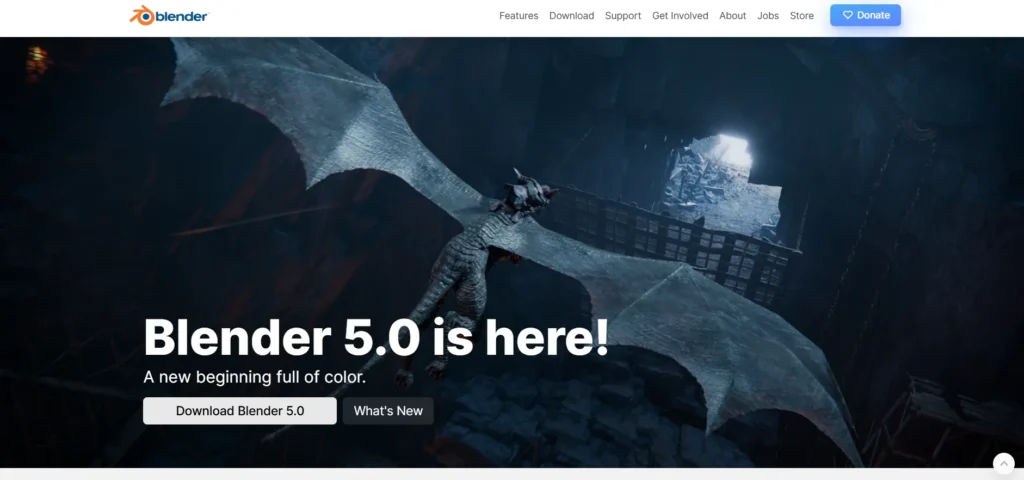
Blender is a must-have 3D animation platform for artists seeking a fully equipped, free and open-source creation suite. It covers every production stage—modeling, sculpting, rigging, texturing, motion tracking, simulation, rendering and even 2D animation through Grease Pencil.
Its real-time viewport, Geometry Nodes, physics tools, VFX workflow and integrated video editor make it a complete production environment used by indie studios, filmmakers and professionals.
Blender has a massive global community, plugin ecosystem, constant updates and no licensing limitations, allowing beginners and experts to learn, experiment and produce industry-level animation, films, games and cinematic projects without budget barriers.
Website: https://www.blender.org/
Key Features:
- Free and open-source 3D creation suite under GPL license.
- Full toolset: modeling, sculpting, animation, rendering, VFX.
- GPU-accelerated rendering (Cycles X) plus real-time viewport.
- Extensive add-on & plugin ecosystem with community support.
- Cross-platform: Windows, macOS, Linux and multiple OS support.
Pricing:
- Free
2. Autodesk Maya
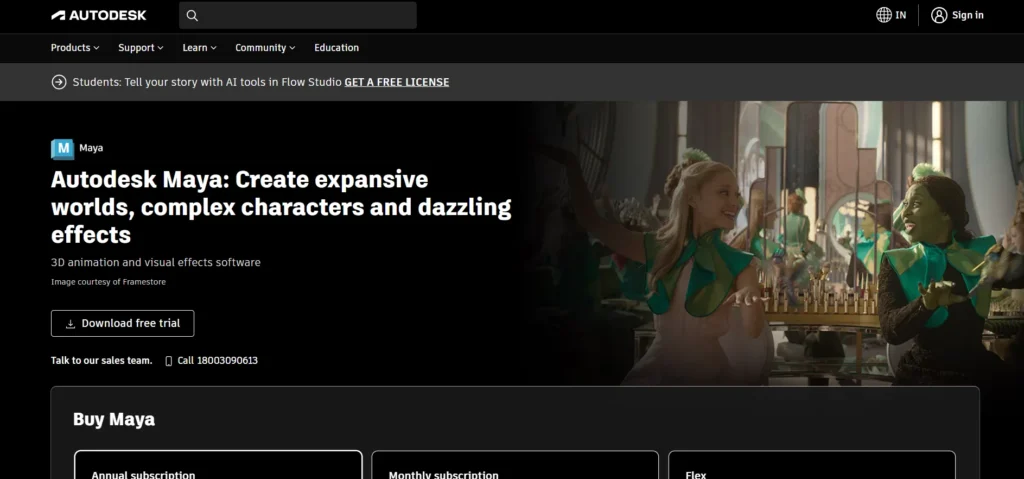
Autodesk Maya is used in industry standard advanced 3D animation, character rigging, simulation and cinematic production. It is necessary in VFX on big-budget studios such as Pixar and DreamWorks, AAA games and photorealistic film-making.
The animation graph, nonlinear editing, hypershade system, Bifrost effects and procedural tools of Maya allow artists to generate advanced character motion, fluid and crowd simulation. Its ability to tie in with pipelines, motion-capture hardware, Arnold renderer and high-end scripting extensibility makes it appropriate to professional production.
Although quite costly, Maya provides unrivaled depth and scalability to an extent that it is required in the studios that strive to achieve world-class visual storytelling and animation output.
Website: https://www.autodesk.com/in/products/maya/overview
Key Features:
- Industry-standard tool for film, VFX, games and animation.
- Advanced rigging and character animation capabilities.
- Full pipeline support: modeling, simulation, rendering, dynamics.
- Cross-platform support: Windows, macOS, Linux (x86-64 / Apple Silicon).
- Extensible with scripting (MEL, Python) for custom workflows.
Pricing:
- Annual subscription– ₹9,735/month
- Monthly subscription– ₹15,340
- Flex– ₹29,500/100 tokens
3. Autodesk 3ds Max

Autodesk 3ds Max is a robust and all-purpose 3D animation software with extensive applications in the games, architecture, motion media and design visualization.
It allows artists to create detailed environments, props and animated chains with firm control with strong support of Arnold rendering and Python scripting, extensive expansion of plugins and plug-in interoperability with Autodesk products and real-time engines such as Unreal.
It has a well-known interface and a powerful material editor that can be used in professional production pipelines and commercial studios. In architectural fly-throughs and in movie creature animation, 3ds Max is an industry must-have.
Website: https://www.autodesk.com/in/products/3ds-max/overview
Key Features:
- Non-destructive modifier stack for flexible geometry editing.
- Integrated cloth simulation solver for dynamic garment/cloth work.
- MAXScript scripting language for automation and tool creation.
- Strong plugin architecture and extensibility for custom needs.
- Widely used for games, architecture visualization, product design.
Pricing:
- Annual subscription– ₹9,735/month
- Monthly subscription– ₹15,340
- Flex– ₹29,500/100 tokens
4. Houdini
Houdini by SideFX is essential for procedural 3D animation, simulation and VFX-based filmmaking. Known for node-based workflows, it allows artists to build reusable systems for smoke, fire, water, destruction, particles, cloth and crowds with unparalleled control.
It is heavily used in Marvel films, AAA games and simulations requiring realism and scale. Houdini’s non-destructive structure empowers experimentation, automation and rapid iteration.
With Solaris USD tools, Karma rendering and pipeline integration, it handles large studio production efficiently. Though complex for beginners, Houdini is a must-have for professionals pushing boundaries in simulation-driven cinematic animation and technical visual effects.
Website: https://www.sidefx.com/
Key Features:
- Fully node-based procedural workflow for geometry, effects, animation.
- Advanced VFX & simulation: fluids, destruction, smoke, pyro, particles.
- Procedural modeling and environment/terrain generation tools.
- Character rigging, crowd simulation and character-FX pipeline support.
- Reusable asset creation and pipeline integration across studios/engines.
Pricing:
- HOUDINI ENGINE– $525 USD per year
- KARMA RENDERER– $195 USD per year
- HOUDINI FX- $3,369 USD per year
- HOUDINI CORE– $1,415 USD per year
5. Cinema 4D
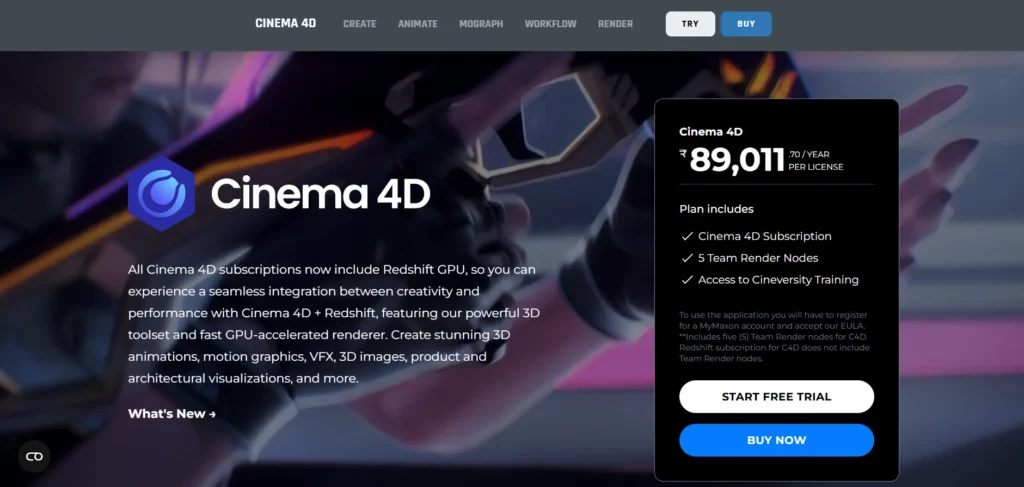
Cinema 4D is an essential addition to motion graphics, 3D animation and broadcast design and is valued in relation to its easy-to-use interface, stability and blazing workflow. It is good at advertising, title sequences, product animation and stylized design-based visuals.
Its unrivaled MoGraph system is optimal at procedural animation, cloners, effectors and time-simulations, allowing artists to animate at scale without difficulty. Cinema 4D can be smoothly integrated with Redshift, After Effects, Unreal and Adobe pipelines so that it is the best choice in content production, branding and studio motion work.
Simple, high-quality images, creative animation and high-quality renders can be produced with ease but at scale by a professional.
Website: https://www.maxon.net/en/cinema-4d
Key Features:
- Intuitive UI with fast learning curve for motion graphics.
- Powerful MoGraph system for procedural motion graphics and animation.
- Integrated rendering and shading tools for quick visual output.
- Strong integration with broadcast and design pipelines (e.g. After Effects).
- Versatile for modeling, animation, rendering and motion-design workflows.
Pricing:
- Cinema 4D– ₹87,959.63 / YEAR Per License
- Cinema 4D- ₹12457.80/mo Billed Monthly
You May Also Read:
6. Autodesk MotionBuilder
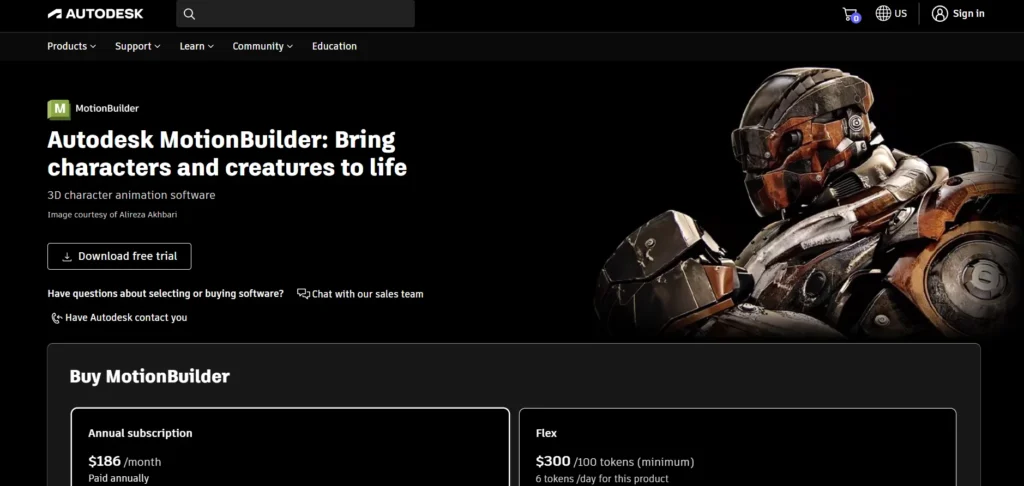
MotionBuilder is a 3D animation software must-have for realistic character animation and motion-capture workflows. It specializes in real-time character performance, puppeteering, biomechanics, and animation retargeting.
Film studios, game teams and virtual production units rely on it to map live actor motion into digital characters with accuracy, speed and lifelike movement. Its nonlinear editing tools streamline animation cleanup, layering and mocap refinement.
It supports VR, optical systems, robotics inputs and direct pipeline integration with Maya and Unreal. MotionBuilder is essential for animators working with mocap pipelines, cinematic storytelling or real-time performance capture environments where speed, realism and natural motion are critical.
Website: https://www.autodesk.com/products/motionbuilder/overview
Key Features:
- Specialized for real-time character animation and motion-capture pipelines.
- Efficient motion retargeting and skeleton-based character animation.
- Non-linear animation editing and layering for complex animations.
- Integration with other Autodesk tools (Maya, 3ds Max) and pipelines.
- Ideal for virtual cinematics, mocap cleanup, real-time animation workflows.
Pricing:
- Annual subscription– $186/month Paid annually
- Flex– $300/100 tokens
7. Daz Studio
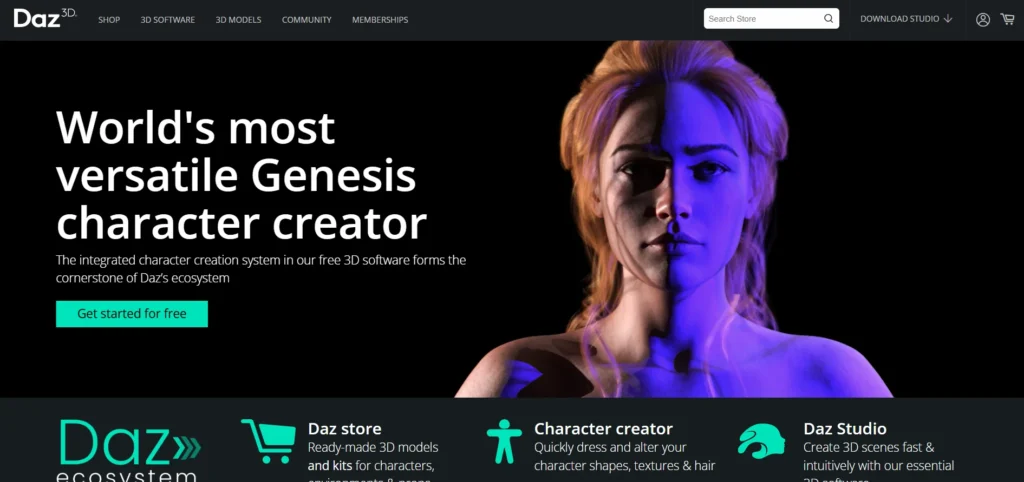
Daz Studio is a must-have 3D animation and rendering software for beginners, hobby artists and creators who want ready-made characters, morphs and environments. It simplifies posing, lighting, camera setup and scene building through drag-and-play workflows.
The large asset marketplace makes animation creation accessible without deep modeling skills. Daz supports dForce simulation, Iray rendering and export to Blender, Unreal and Maya for advanced work.
Users can animate human figures, create fantasy characters, visual art, book illustration or quick cinematic stories with minimal technical setup. It’s ideal for storytellers and indie creators who need fast results with minimal learning curve.
Website: https://www.daz3d.com/
Key Features:
- Easy character setup with rigged human models and customizable morphs.
- Drag-and-drop interface for scenes, clothing, props and environments.
- Real-time posing, lighting and rendering for quick visualization.
- Support for import/export of common 3D file formats for pipeline flexibility.
- Accessible for beginners, suitable for illustration, pre-vis, indie animation.
Pricing:
- Free
8. LightWave 3D
LightWave 3D is a long-trusted animation software known for its fast rendering, clean modeling tools and traditional 3D animation workflow.
Favored in television, indie CGI production and smaller studio pipelines, it offers modeling and animation as separate but connected modules, simplifying workflow for artists. LightWave excels in lighting, volumetrics, character animation and particle effects, making it valuable for sci-fi and procedural VFX.
Despite competition, it remains a must-have for efficiency-focused animators needing a complete, lightweight production tool without subscription lock-in. Its affordability, CPU-based rendering and broadcast-tier results make it a practical choice for professional animation output.
Website: https://lightwave3d.com/
Key Features:
- Full-featured rendering and animation for film, TV, VFX, games.
- Traditional modeling and rendering pipeline suitable for static and animated scenes.
- Lightweight compared to heavy 3D suites, offering efficient performance.
- Useful for matte painting, pre-visualization, motion graphics and advertising.
- Mature tool with long history, reliable for smaller studios or indie work.
Pricing:
- £495 GBP
9. Modo
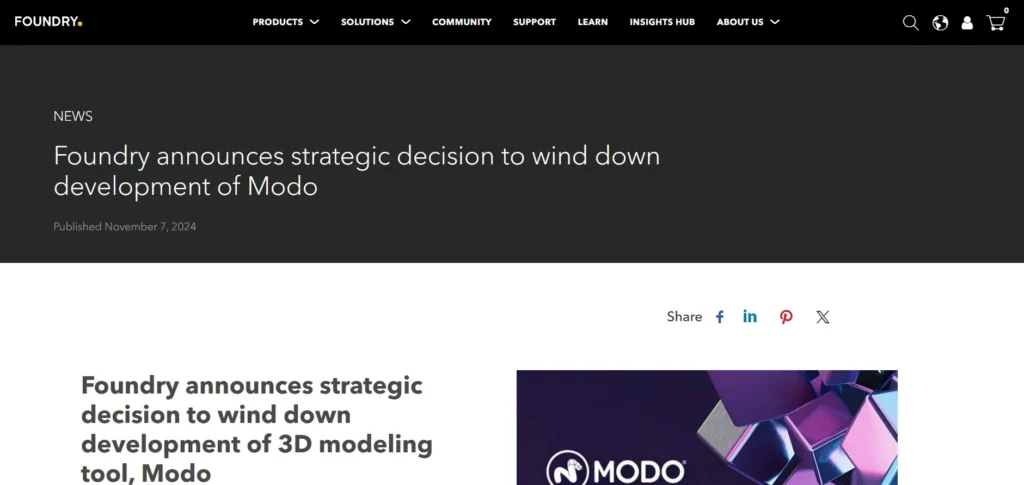
Modo is a must-have 3D animation software for modelers, product designers, and animators seeking a smooth, artist-friendly workflow. Its modeling engine is known for speed, sculpting brushes, mesh-fusion booleans, and intuitive subdivision tools.
Modo also supports animation, UV mapping, materials and rendering, making it an excellent asset creation environment for games, visual art and product visualization. Its falloff-based workflow gives precise deformation control while the integrated renderer offers high-quality output without heavy setup.
Modo is ideal for designers who prioritize modeling accuracy, iteration speed and creativity while still needing animation functionality within a single professional environment.
Website: https://www.foundry.com/ja/products/modo/new-releases
Key Features:
- Fast and artist-friendly polygonal and subdivision modeling tools.
- Sculpting, mesh-fusion booleans, subdivision — great for complex models.
- Built-in rendering and material support for previewing models directly.
- UV mapping and texture tools integrated for game-asset and product design workflows.
- Versatile for modeling, visualization, design, and mid-level animation pipelines.
10. Autodesk Mudbox
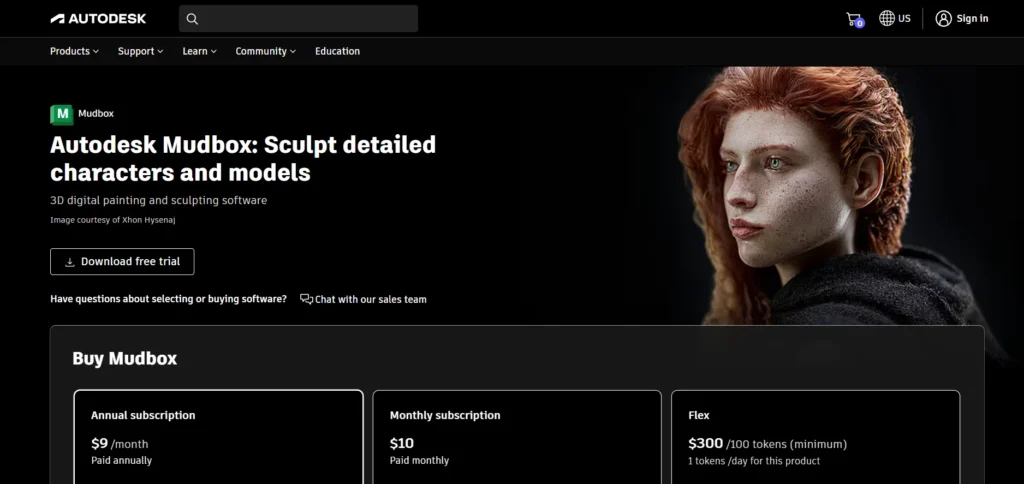
Mudbox is a must-have digital sculpting tool for high-resolution character creation, detailing, retopology and texture painting. It offers intuitive brushes, multi-resolution sculpt layers and displacement workflows ideal for creature artists, 3D printing and film asset development.
Mudbox integrates with Maya and 3ds Max, enabling seamless pipeline sculpt transfer and animation readiness. Texture painting, PBR support and stencils help artists add realism quickly.
Though lighter than ZBrush, its simplicity benefits concept designers who need fast high-detail sculpting without steep complexity. Mudbox remains essential for studio-quality character detailing, refinement and pre-animation sculpt workflows.
Website: https://www.autodesk.com/products/mudbox/overview
Key Features:
- High-resolution digital sculpting with subdivision and multi-resolution mesh support.
- Non-destructive sculpt layers for controlled detailing and modifications.
- Texture painting, normal and displacement map creation built-in.
- Smooth import/export pipeline with common 3D formats (.obj, .fbx, .mud).
- Ideal for character detail sculpting, concept art, and pre-animation sculpting.
Pricing:
- Annual subscription– $9/month
- Monthly subscription– $10
- Flex– $300/100 tokens
11. Adobe Substance 3D
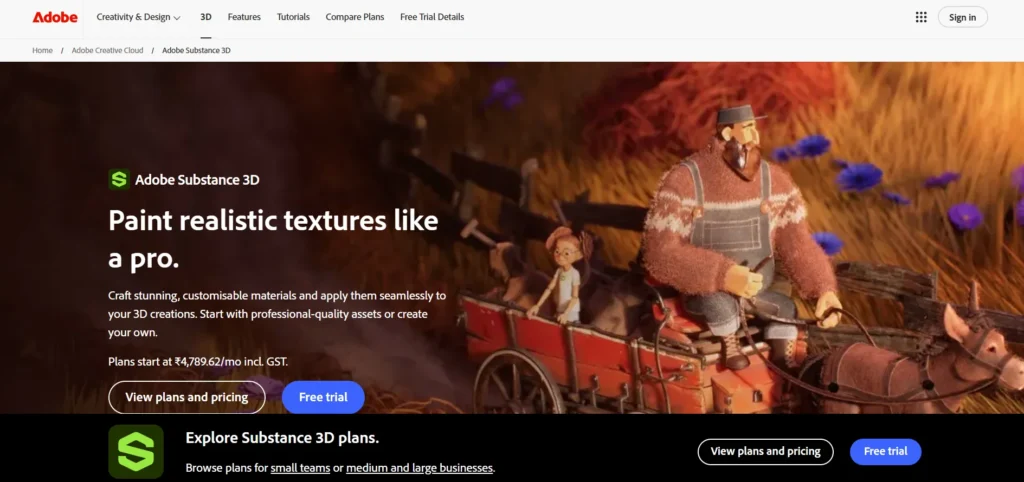
Adobe Substance 3D is essential 3D animation software for material creation, texture painting, and realistic surface detail in modern animation pipelines. Its suite—Painter, Designer, Sampler, and Stager—enables artists to craft intricate PBR textures, procedural surfaces, smart materials, and high-quality look-development renders.
Used heavily in film, gaming and product visualization, Substance produces photoreal assets ready for animation in Maya, Blender and Unreal. It accelerates shading workflows with smart masks, generators and non-destructive layer systems.
Substance is a must-have for animators seeking believable metal, cloth, skin, wood, weathering and cinematic realism, turning raw models into finished, animation-ready worlds and characters.
Website: https://www.adobe.com/in/products/substance3d.html
Key Features:
- Procedural material & texture creation for realistic PBR surfaces.
- Smart masks, generators and non-destructive layering for flexible texturing.
- Seamless integration with major 3D software and pipelines.
- Support for texture painting, material design, and look-dev for assets.
- Streamlines shading and surfacing workflows for characters, environments, products.
Pricing:
- Adobe Substance 3D Collection– ₹4,789.62/mo
- Adobe Substance 3D Texturing– ₹1,995.38/mo
12. Mari
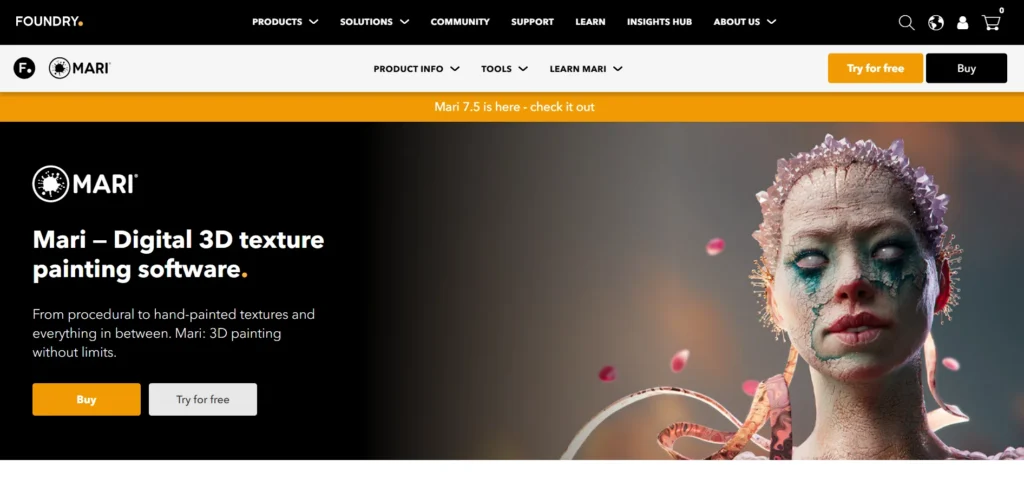
Mari is a must-have high-end texture painting software for film-quality characters and environments. Used in Hollywood VFX studios, it excels at large-resolution textures, UDIM management and multi-layer painting across complex assets.
Mari supports real-time previews, procedural nodes, baking, displacement painting and seamless integration with Arnold, Renderman and USD workflows. Artists rely on it for dragons, creatures, planets, environments and hero assets requiring extreme detail.
Though advanced, Mari unlocks cinematic texture quality impossible in consumer-grade software, making it indispensable for high-fidelity animation pipelines and professional surfacing teams.
Website: https://www.foundry.com/products/mari
Key Features:
- High-resolution texture painting with UDIM and multi-layer support.
- Efficient for film-quality surfacing: complex characters, creatures, environments.
- Real-time preview of shaders and materials for look-dev iteration.
- Supports large texture sets—great for large asset pipelines and detail work.
- Critical for high-end VFX, cinematic animation, and professionally textured assets.
Pricing:
- MARI INDIVIDUAL– $299/yr or $35/mth
13. Marmoset Toolbag
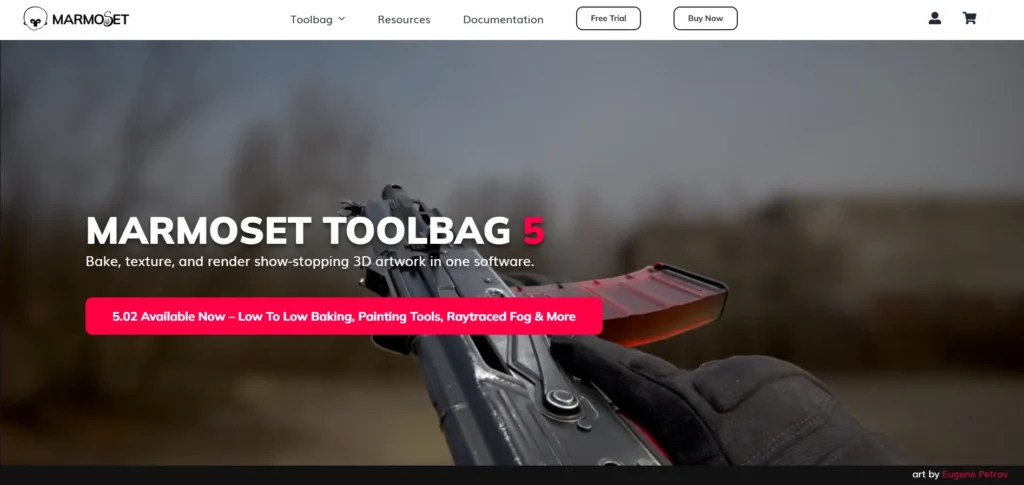
Marmoset Toolbag is a must-have 3D animation software and real-time rendering and look-dev tool used for game assets, animation preview, and 3D presentation. It delivers stunning lighting, PBR shading, baking, and real-time rendering without slow offline processes.
Toolbag lets users import rigs, animate cameras, preview materials and export polished turntables or cinematic product reels. Ideal for portfolios, realtime pre-viz, character showcasing and animation testing, it accelerates the feedback loop from model to final presentation.
Toolbag is essential for artists needing rapid visual output, iterations, or physically accurate previews before pushing assets into engines like Unreal or Unity.
Website: https://marmoset.co/
Key Features:
- Real-time rendering and look-dev engine for quick previews and bake output.
- PBR shading, baking, lighting and material preview in real-time viewport.
- Ideal for game-asset preview, portfolio turntables, and material testing.
- Fast feedback loop from model to final presentation without heavy renders.
- Enables artists to iterate materials, shaders and lighting quickly before final export.
Pricing:
- Subscription License– $18.99per month (USD)
- Perpetual License– $399one-time fee (USD)
14. Marvelous Designer
Marvelous Designer is a must-have for cloth simulation, garment design and character costume animation. It lets artists create fabric physically rather than sculpting folds manually, enabling natural motion, drape and dynamic interaction.
Designers can stitch patterns, preview layering, animate cloth movement, simulate wind, wrinkles and collisions with characters. Used in films, 3D fashion, Metaverse design and AAA games, it produces realistic clothing faster than traditional workflows.
Marvelous Designer is indispensable for animation involving humans, fashion, capes, dresses and textiles where realism and motion-driven behavior significantly enhance visual storytelling and character authenticity.
Website: https://www.marvelousdesigner.com/
Key Features:
- Physically-simulated cloth design for realistic clothing/fabric animation.
- Pattern-based sewing and garment creation workflow for apparel simulation.
- Realistic drape, collision, fold and motion simulation on characters and props.
- Useful for character clothing, fashion visualization, game & film wardrobe work.
- Simplifies clothes/cloth animation compared to manual modeling and rigging.
Pricing:
- Personal– $39/month
- Personal– $196/year
15. Embergen
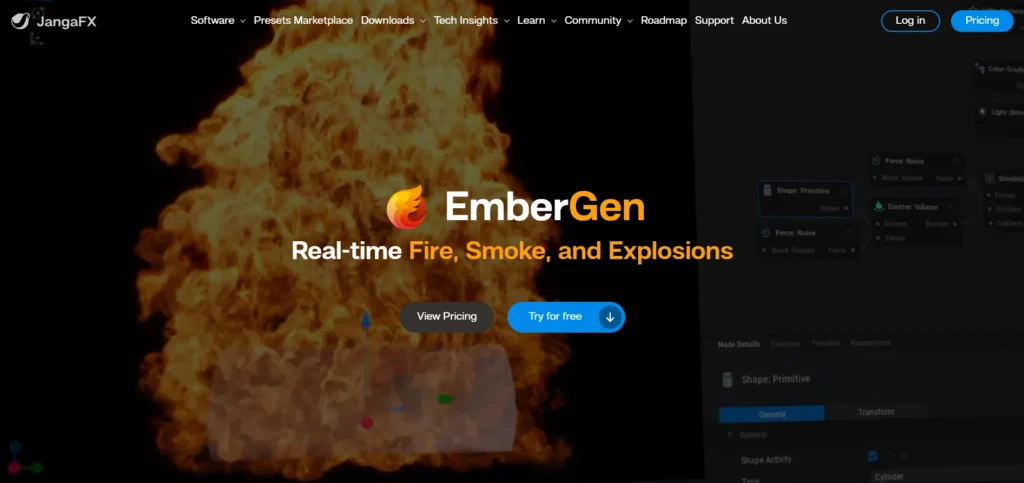
Embergen is a must-have real-time fluid simulation tool for fire, smoke, explosions, clouds and atmospheric animation.
Unlike traditional simulation tools requiring long renders, Embergen offers instant playback, GPU-accelerated previews and fast export of VDBs, sequences and textures for film and game pipelines. It empowers artists to iterate creatively without waiting hours for simulation baking. Ideal for VFX, cinematics and stylized action shots, Embergen integrates well with Houdini, Blender and Unreal for final shot rendering.
It revolutionizes effects work by providing speed, artistic freedom and high-quality output, making it indispensable for modern animation environments.
Website: https://jangafx.com/software/embergen
Key Features:
- Real-time GPU-accelerated fluid, smoke, fire and explosion simulations.
- Instant playback and quick previews for fast FX iteration and iteration.
- Export VDB or caches for integration into larger 3D pipelines.
- Perfect for game cinematics, real-time previews and quick VFX prototyping.
- Enables realistic atmospheric, smoke, fire and particle-based effects fast.
Pricing:
- Indie & Hobby– $299.99/year
- Studio– $1,400/year
Ending Thoughts
In conclusion, 3D animation software stands as one of the most revolutionary advancements in digital media, transforming how stories are told and experiences are created. Its unique capability to bring characters, objects, and worlds to life with depth, motion, and realism has reshaped industries from entertainment and gaming to education, product design, architecture, and medical visualization.
As technology continues to evolve with AI-driven workflows, real-time rendering, and virtual production, 3D animation is becoming more accessible and powerful than ever before. It bridges imagination with innovation, enabling creators to produce visuals that were once impossible. Ultimately, 3D animation not only enhances creativity but also expands the boundaries of human expression and digital communication.
FAQs
What is 3D Animation?
3D animation is the process of creating moving images in a three-dimensional digital space, allowing objects and characters to appear realistic with depth, lighting, and texture.
Where is 3D Animation Used?
It is widely used in movies, video games, advertisements, architectural visualization, product design, simulation training, education, and virtual reality.
What Skills are needed to Become a 3D Animator?
A 3D animator typically needs creativity, knowledge of modeling, rigging, texturing, lighting, and proficiency in software like Blender, Maya, or Cinema 4D.
Is 3D Animation Difficult to Learn?
It can be challenging for beginners due to detailed workflows, but with practice, tutorials, and proper learning tools, anyone can master it over time.
Which is the Best Software for 3D Animation?
There is no single best tool—Maya is industry-standard for films, Blender is popular for beginners and professionals, Unreal Engine is great for real-time graphics, and each has unique strengths depending on needs.