

As businesses embrace remote work, cloud systems, and digital collaboration, the number of connected devices has grown rapidly—along with the risks they face. Every endpoint, whether it’s a laptop, smartphone, or server, can become a gateway for cyber threats if left unprotected. This is why endpoint protection software has become an essential part of modern cybersecurity strategies. It provides intelligent, always-on security that actively monitors device activity and blocks threats in real time.
Today’s cyberattacks are highly sophisticated, using tactics like ransomware, phishing, and zero-day exploits to evade traditional security tools. Modern solutions respond to these challenges with AI-powered detection, behavioral monitoring, and automated threat response. By identifying suspicious patterns before damage occurs, endpoint protection ensures data safety, system stability, and uninterrupted operations—helping organizations stay secure and confident in an increasingly connected digital environment.
What Is Endpoint Protection Software?
The software is endpoint protection solution that is intended to ensure that all devices in an organization are protected against cyber threats, regardless of the location where the device is in use. Nowadays, workers operate in offices, houses, airports, cafes, and work by using laptops, phones, tablets, and other connected gadgets. All these end points can be a soft target by the attackers unless well secured.
In its simplest form, the endpoint protection software is a central control security system. Security teams are able to view all endpoints, identify unusual behavior, investigate threats and issue direct action based on a single dashboard. Rather than responding to damage once it has occurred, endpoint protection inspects the behavior of files, applications and users on a device in real time in order to detect threats in the early stages.
Current styles of endpoint protection platforms (EPPs) are much more than straightforward antivirus scan. They scan the activity of the system in real-time, search the hidden or fileless attacks, and even identify the threats imitating the normal user behavior. Most significantly, they safeguard equipment even when they are not attached to the corporate network, or that they are offline.
In simple terms, the endpoint protection software serves as a 24 hours guardian to your equipment. In the event that a cyberattack attempts to get into your system via any device, endpoint protection is the initial line of defense that identifies and blocks it, as well as assists in preventing the threat of spreading to other parts of your organization.
Why Endpoint Protection Is More Important Than Ever?
The current cyber threats are more intelligent, silent and perilous than ever. We shall examine each of the main reasons why endpoint protection is now absolutely needed, in a manner that can be easily comprehended and readily applied in practice.
1. Attacks without Files are on the Rise: The attackers of the modern cyberattack do not necessarily place malicious files on a computer. They instead directly execute in system memory with applications that the system can be assured of such as PowerShell or browser applications. The conventional antimalware devices do not normally identify such attacks as there is no file to scan. Such invisible threats are overcome by endpoint protection because it does not look at files only, but behavior.
2. Behavior-Based Attacks Fake Normal Behavior: The attackers of today research the behavior of real users and create attacks that appear valid such as logging in during unusual hours or using sensitive files at a slow pace. Protecting endpoints identifies trends and outlines abnormal behavior in the absence of a malware signature.
3. Attacks can be programmed to look innocent: Most cyber crimes are designed to appear as normal activities such as accessing documents, clicking on links or even executing background activities. Endpoints protection is used to detect minute anomalies that human beings and simple tools might fail to notice and prevent attacks before the damage is done.
4. Remote Work and Hybrid Work increases the attack surface: Security perimeters have been eliminated because employees work at home or on personal devices. Endpoint protection provides protection to devices both on and off the corporate network, providing consistency in the security of remote and hybrid workforces.
5. Conventional Security Tools Are Not enough anymore: Outdated antivirus is based on known signatures and rules. Based on the experience of CrowdStrike, the contemporary attackers are constantly changing in nature, and the old solutions are no longer relevant in the combating of new methods.
6. Constant Surveillance Deters active violations: Protection of the endpoints offers 24/7 visibility of devices. Even minor and suspicious activities are recorded and processed, and the attackers cannot remain unnoticed within systems.
7. Instantaneous Threat Perry: Cyberattacks spread fast. Endpoint protection identifies threats immediately and may automatically isolate the infected devices to prevent the propagation of the attack even through the network.
8. Quick Response Minimizes Damages and downtimes: Endpoint protection can reduce the loss of data, operational interruption, and recovery expenses, which in turn benefit businesses to resume normal operations sooner, by allowing the quick investigation and responding to data.
Main Types of Endpoint Protection Solutions
The endpoint protection solutions have also developed with the passage of time in line with human working patterns and the functioning modes of cyber threats. The three key types of endpoint protection are useful because they enable organizations to select an appropriate security model that meets their requirements. Each type is described in detail and in a simple manner at the bottom.
1. Legacy Endpoint Protection
The conventional on-premises security model, which was known as legacy endpoint protection, is the one that was commonly used by many organizations before cloud adoption became widespread. Under this configuration, the entire security management occurs on a local data center. Every endpoint, e.g. desktop or laptop, has a heavy security agent which reports to this central server.
This model is effective when the employees and devices remain within the office network. The security teams tend to only see into devices that are related to the internal network and it is hard to track laptops or mobile devices when they go out of office.
Limitations:
Old systems introduce security silos, need continual manual maintenance, and cannot be used to secure the remote users. Since more workforces are becoming mobile, this model tends to create blind spots that attackers can utilize.
2. Hybrid Endpoint Protection
The transition model that was introduced is the hybrid endpoint protection to support remote work and BYOD (Bring Your Own Device) settings. It is a hybrid of in-capability infrastructure and partially cloud-based administration enabling a certain degree of remote monitoring and control.
Hybrid solutions are more flexible and needed in comparison to legacy systems and allow organizations to offer protection outside of the office. They are however mostly constructed by altering the older tools and not structuring them to suit the cloud.
Limitations:
Due to the fact that hybrid solutions are not entirely cloud-native, they can be limited in their performance, scalability, and timely updates about the threats, as compared to modern platforms.
3. Cloud-Native Endpoint Protection
Cloud based endpoint protection is developed specifically on the cloud and is designed to adapt to the modern-day distributed work environments. All endpoints are managed by
security teams through the help of a centralized cloud console, and real time device behaviour is monitored by lightweight agents.
These solutions offer protection at any time and place in addition to when the devices are not online or when they are out of network. Based on real-time threat intelligence, automation, and sophisticated analytics, they identify and prevent attacks at a faster pace.
Why it’s preferred today:
Cloud-native endpoint protection avoids silos, scales, offers faster detection and response rates as well as full visibility which makes it the best option in the current cybersecurity solutions.
Benefits of Endpoint Protection Software
Below are easy to understand and audience friendly with a bold one-line subheading and straight forward and clear explanations.
1. Live Tracking on Every Gadget: Endpoints protection keeps the security personnel informed on the activity of all endpoints in real-time and provides a real-time perspective on what is going on in all parts of the organization.
2. A centralized Security Management: Every endpoint is managed and viewed through one dashboard, making it more simple and removing blind spots.
3. Threat Intelligence to Action: Unstructured security data is translated to useful information that can guide teams to interpret the threat and act appropriately in real-time.
4. AI-Driven Threat Detection: Artificial Intelligence can recognize suspicious trends and unusual behavior that can be overlooked by conventional means.
5. Reduced False Alerts: Noise can be eliminated by the use of machine learning so that security teams do not need to spend resources on false alarms but on real threats.
6. Instant Threat Containment: Attacks are prevented by instantly isolating infected devices and preventing their transmission throughout the network.
7. Quickened Incident Response and Recovery: The use of automated detection and response saves a lot of time in terms of investigation and accelerates the recovery of systems.
8. Better Security With Less Resources: Endpoint protection enhances security performance and saves on time, effort, and operational expenses by automating the routine jobs.
How to Choose the Best Endpoint Protection Software?
1. Determine Your Security Requirements: Learn your devices, users, operating systems, and the level of danger to focus on the correct solutions as fast as possible.
2. Make Cloud-Native a Priority: Select cloud based solutions to offer real time protection, remote management and simple scaling.
3. Advanced Detection Technologies Search: Find AI, behavioral analysis and EDR to identify new, unknown, and zero-day attacks.
4. Evaluate the Implementation and Operation Ease: Choose software that is easy to implement, administer, and use without intensive IT work.
5. Assess Auto-Response Skills: Use solutions that will automatically isolate, block, and fix threats to minimize the damage.
6. Survey Threat Intelligence and Analytics: Strong analytics assist in ranking the risks, comprehending attacks, and enhancing security in the long run.
List of 15 Best Endpoint Protection Software
1. CrowdStrike Falcon
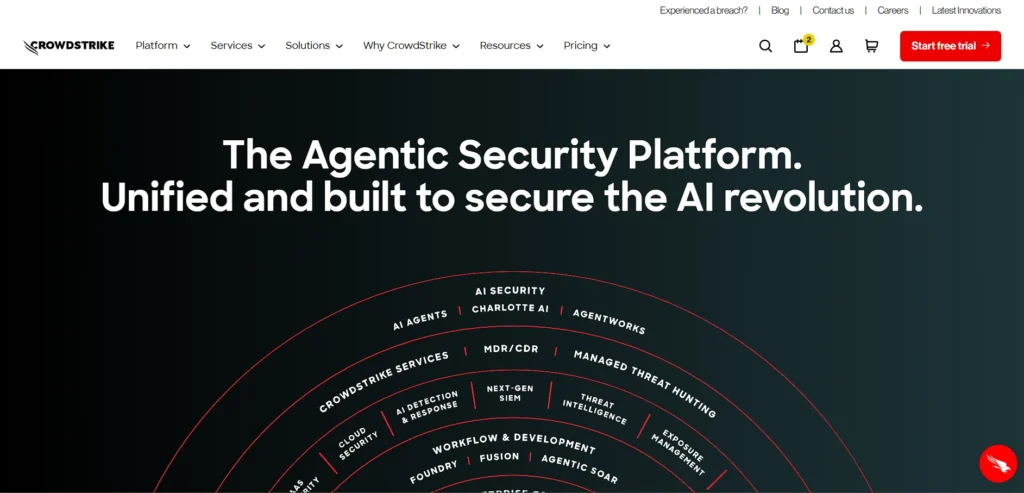
CrowdStrike Falcon is a cloud-native endpoint protection solution that is designed to avert contemporary cyberattacks to evolve into breaches. It works with a light agent that is installed on the endpoints and continuously gathers behavioral data and transmits it to the cloud where it can be analyzed in real-time. Falcon does not use signature-based detection as opposed to the traditional antivirus tools.
It also facilitates proactive threat hunting, which assists organizations to detect suspicious behavior early. Falcon enhances the performance of an organization by integrating prevention, detection, and response in a single platform that strengthens endpoint security and enhances operational performance throughout the organization.
Key Features:
- Cloud-native architecture of centralized management console.
- Smart behavioral threat detection and prevention.
- Live threat data on a worldwide basis.
- High-end endpoint detection and reaction functionality.
- Threat investigation and proactive threat hunting tools.
- Slim agent that has low system impact.
- Automated containment and remedial measures.
Pricing:
- Falcon go : $59.99/ annually
- Pro: $99.99/ annually
Best For:
- Large organizations that need to have sophisticated, cloud-native endpoint security.
2. Microsoft Defender on Endpoint
Microsoft Defender for Endpoint is an endpoint protection software that is business grade and developed to give full spectrum security to a variety of operating systems. It is based upon the Microsoft security ecosystem and provides a deep-seated visibility and coordinated threat response. The Defender for Endpoint keeps track of endpoint behavior, finds vulnerabilities, and suspicious actions with the use of analytics in the cloud. It integrates threat prevention, detection, investigation and automated response into a platform. Centralized organizations will enjoy uniform protection of Windows, MacOS, Linux, Android, and iOS platforms.
The platform utilises Microsoft global threat intelligence in ensuring that it is informed on the emerging threats. Defender for Endpoint is also useful in assisting security teams to minimize attack surfaces by detecting misconfigurations and old software. Auto investigative options can be used to accelerate the reaction time and reduce manpower. Organizations can have a more positive security posture and compliance with good reporting and alerting capabilities. The solution is particularly useful in organizations that are already using the Microsoft 365 services.
Key Features:
- Multi-OS endpoint security coverage.
- Threat detection and analytics on clouds.
- Remediation and investigation workflow: Automated.
- Extensive assimilation with the Microsoft security tools.
- Exposure and endpoint vulnerability management.
- Dash board with detailed reporting.
- Constant surveillance and analysis of behavior.
Pricing:
- Originally starting from ₹ 165.00
- now starting from ₹ 165.00 user/month
Best For:
- Companies that utilize Microsoft 365 and want to have endpoint protection.
3. SentinelOne Singularity
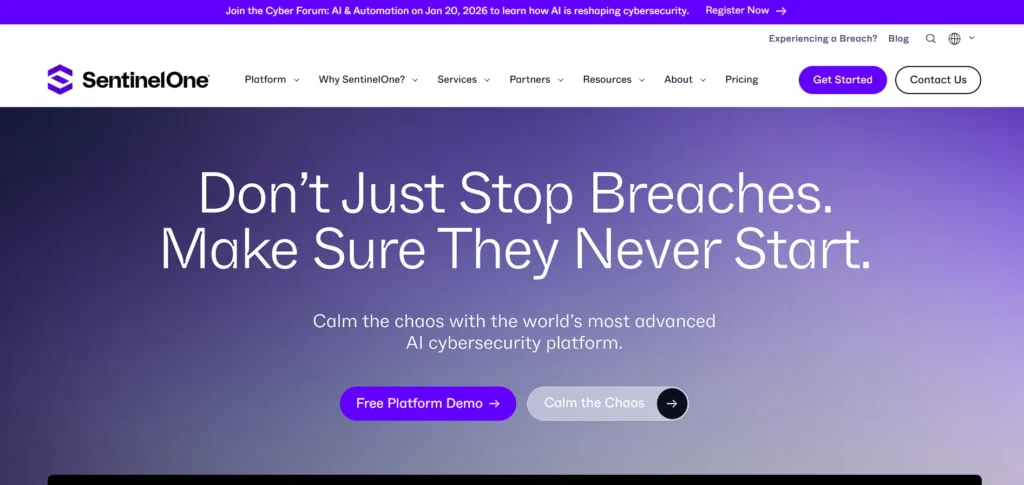
SentinelOne Singularity is an advanced Endpoint Protection Software that is self-directed and provides real-time threat prevention, detection, and response based on artificial intelligence. It monitors endpoint behavior continuously and automatically responds to malicious behavior without the need to be managed by a person. Singularity serves to guard against contemporary threats, including ransomware, fileless attacks, and zero-day attacks.
SentinelOne offers clear insights into the timeline of attacks, enabling security teams to understand how threats intruded and propagated. SentinelOne is focused on speed, automation, and accuracy to assist the organization to react more quickly to the incident. The solution is highly appropriate to the companies that need good security and less human intervention. Through a combination of prevention and response, Singularity shapes up the overall security posture and records lower operational burden.
Key Features:
- Autonomous threat detection with AI.
- Instant behavior analysis and response.
- Ransomware backup and recovery functionality.
- Single lightweight agent architecture.
- There is cross-platform endpoint support.
- In-depth storyline of attack and visibility.
- Automatic remediation and containment.
Pricing :
- Singularity complete: $179.99 per endpoint
- Commercial: $229.99 per end point
Best For:
- Mid-sized and large companies that require an automated endpoint security.
4. Sophos Intercept X
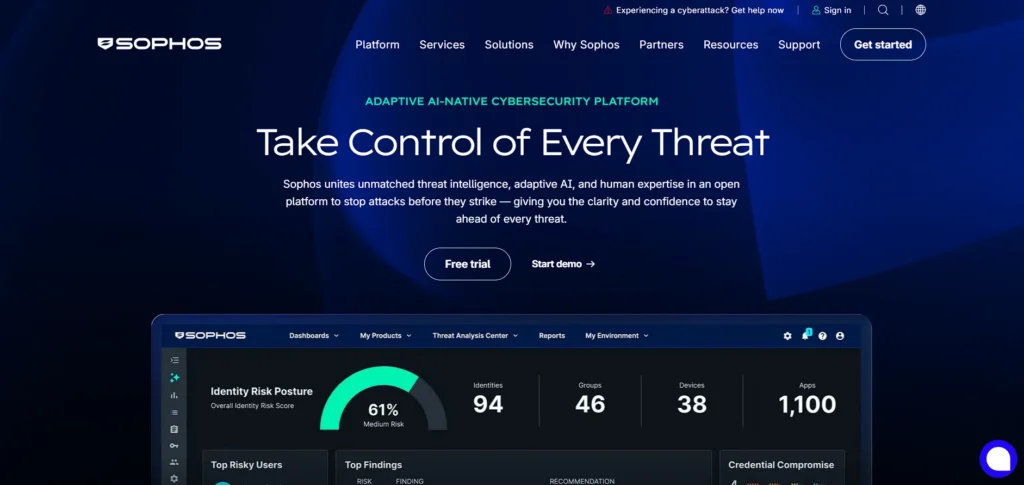
Sophos Intercept X is an enhanced endpoint protection tool that is dedicated to thwart ransomware, exploits, and malware applications through deep learning technology. It is used to analyze endpoint activity in real-time to prevent damaging malicious actions. Intercept X is not dependent on signatures alone, which means that it is able to deal with new and unknown threats. The platform combines endpoint detection and response penetration enabling the security teams to enquire and deactivate threats promptly.
Sophos focuses on coordinated security through the distribution of threat intelligence between endpoints and network devices. Such synchronized action enhances visibility and increases the response rates. It has good anti-ransomware features that has made it an option among the increasing business. Sophos Intercept X is a product that supports advanced protection and usability, meaning that organizations can enhance security without complexity.
Key Features:
- Malware detection using deep learning.
- Complex ransomware defense software.
- Deter attack known vulnerabilities.
- Incorporated EDR functionality.
- Root cause analysis and visualization of attacks.
- The centralized management based on clouds.
- Coherent security in the environment.
Pricing:
- Custom pricing
Best For:
- Companies with a small to middle size and need to ensure protection against ransomware.
5. Trend Micro Apex One
Trend Micro Apex One refers to a current Endpoint Protection Software engine that integrates conventional security practices with a sophisticated threat detection system. It mitigates endpoint attacks against malware, ransomware, and fileless threats using behavioral analysis and machine learning. Apex One offers strong visibility into endpoint activity, helping security teams identify threats at an earlier stage. The platform supports multiple deployment options, including on-premises and cloud-based management. Trend Micro continuously updates its threat intelligence to protect against emerging risks. Apex One also helps minimize vulnerabilities by safeguarding endpoints against known and unknown exploits.
Apex One is connected to the rest of the security tools to enhance incident response and investigation. Layered protection offers organizations protection based on the changing threats. Trend Micro Apex one can be applied to businesses that require the strong endpoint security and have the possibility to deploy it and control it flexibly.
Key Features:
- Machine learning detection and behavioral analysis.
- State-of-the-art ransomware defense.
- It has fileless attack prevention features.
- Shielding technology of vulnerability.
- Single endpoint management web interface.
- Scalability and flexible deployment option.
- Threat intelligence updates on a continuous basis.
Pricing:
- Not available
Best For:
- Organizations that require multi-layered and balanced endpoint protection.
6. Bitdefender GravityZone

Bitdefender GravityZone is a full endpoint protection platform that has been developed to provide high-performance protection at minimum system impact. It leverages machine learning, behavioral analysis and hi-tech threat intelligence to safeguard the endpoints against malware, ransomware and zero-day attacks. GravityZone is driven by a single lightweight agent that makes it more complex and easy to manage in any environment.
The platform offers centralized visibility and control by a cloud-based console whereby the security team can monitor the endpoint activity in real time. The detection engine of Bitdefender is said to be of high accuracy and low false-positive rate. It is also possible to have quick incident response through isolation and remediation, which is made possible by the platform. GravityZone provides the most efficient protection and operational performance as it allows organizations to strike the right balance in ensuring their protection without compromising performance.
Key Features:
- Threat prevention engine based on machine learning.
- Advanced attack detection via behavioral monitoring.
- One agent to minimize impact on the system.
- Single location cloud management control.
- Risk and vulnerability assessment Automated.
- Quick endpoint isolation and recovery software.
- Physical, virtual and cloud endpoint support.
Pricing:
- Custom pricing
Best For:
- Organizations that require endpoint protection of high performance with low overheads.
7. VMware Carbon Black
VMware Carbon Black is a sophisticated Endpoint Protection Software and endpoint detection and response platform constructed to safeguard companies against contemporary cyber threats. It is concentrated on continuous monitoring and behavioral analysis in order to detect suspicious activity on endpoints. Carbon Black gathers fine telemetry information, which allows security personnel to research threats with accuracy. The platform suits security operation teams that need in-depth visibility and control. Carbon Black is easily integrated into the larger VMware security ecosystem, improving workload protection. Its cloud-based technology helps enable scalable deployment in enterprise environments.
The automated response actions aid in the containment of threats as quickly as possible and minimize dwell time. The solution focuses on prevention, detection and response in a single environment. Carbon Black is also suitable to those organizations that have established security functions and seek advanced endpoint visibility. It aids in minimizing the effects of attacks as it allows one to investigate and fix it much faster.
Key Features:
- Constant monitoring of endpoint activities.
- Threat detection behavioral analytics.
- Robotic containment and responding measures.
- Scalable architecture on a cloud basis.
- Combination with VMware security ecosystem.
Pricing:
- Varied prices depending on the deployment size and capabilities.
Best For:
- Companies that have security operations teams.
8. Palo Alto Cortex XDR
Palo Alto Cortex XDR is a superior endpoint-protection and detection tool, which integrates endpoint, network, and cloud information to engage more advanced threat detection. It employs artificial intelligence to match events in two or more sources and minimize the alert noise and enhance accuracy. Cortex XDR aims at preventing advanced attacks by detecting patterns that other tools fail to detect. The platform offers abysmal insight into endpoint behavior and attack chains. Security teams can react fast to events with automated investigation features.
It assists threat hunting and forensic analysis that is proactive. The platform enables scaling over large enterprise environments. Cortex XDR uses analytics and automation along with threat intelligence to enhance detection and response speed and efficiency. It assists organizations to mitigate breach effects and enhance overall posture of security.
Key Features:
- Artificial intelligence correlation of security data sources.
- State of the art endpoint threat detection.
- Automated research and reaction processes.
- Noise of alerts will be reduced by smart analytics.
- Full insight into attack history.
- Combined threat intelligence feeds.
- Enterprise scale architecture.
Pricing:
- Prices added in layers depending on sources of data and coverage of endpoints.
Best For:
- Big companies that use Palo Alto Networks security products.
9. ESET PROTECT
ESET PROTECT is a centralised Endpoint Protection Software solution that is distinguished by its lightweight architecture and strong malware detection capabilities. It employs superior heuristics and machine learning to detect both known and emerging threats. ESET PROTECT features a cloud-based console that provides centralized management, enabling real-time monitoring and effective policy enforcement.
Its platform is compatible with a variety of operating systems, which makes it appropriate to various IT settings. ESET focuses on performance efficiency so that it can have little effect on endpoint resources. Auto-reporting and alerting assists security personnel to act promptly on incidents. The solution is simple to roll out and maintain, without the need of a bigger team of IT. ESET PROTECT offers basic functionality and advanced protection features, which is neither as simple as it seems to be.
Key Features:
- Cutting-edge threat detection through heuristics.
- Minimal endpoint security agents.
- Unified cloud control dashboard.
- Operating system cross-platform support.
- Live tracking and surveillance.
- Compliance and reporting automated tools.
- Good malware and ransomware protection.
Pricing:
- Rs. 19,942 : 5 devices/ year
Best For:
- Small to medium sized companies that require effective endpoint security.
10. McAfee Endpoint Security

McAfee Endpoint Security is a layered endpoint protection platform, which protects against ransomware, advanced threats, and malware. It integrates behavioral monitoring and signature-based detection in order to be comprehensive protection. Centralized management is provided by the platform, and security personnel can implement the policies on the endpoints.
McAfee incorporates threat intelligence in the global arena to keep up with the new attacks. Smart response systems are used to control threats in a short period of time. The solution accommodates various operations systems as well as deployment models. Endpoint Security by McAfee is aimed at minimization of attack surfaces and enhances visibility and control.
Key Features:
- Multi-layered threat prevention strategy.
- Behavioural analytics and monitoring.
- Single point-of-care endpoint management console.
- Threat intelligence integration at the global level.
- Automated threat response measures.
- Cross platform endpoint support.
- Security enforcement through policies.
Pricing:
- Endpoint-based and feature-based pricing: ₹1699: 10 devices
Best For:
- Companies that want conventional but holistic endpoint security.
Suggested Read: Best DDoS Protection Software
11. Kaspersky Endpoint Security
Kaspersky Endpoint Security is a powerful Endpoint Protection Software solution used to protect organizations against a large spectrum of cyber threats. It incorporates signature-based detection with sophisticated behavioral analysis to identify malware, viruses, ransomware, and zero-day attacks. The platform offers centralized control through a single management console, allowing administrators to monitor and manage endpoint security effectively. Kaspersky focuses on proactive threat prevention while keeping systems stable and operational. The solution is well suited for heterogeneous IT environments, as it supports a wide range of operating systems.
The platform keeps the threat intelligence up-to-date to keep pace with the techniques of attack. Kaspersky provides customers with a secure manner of protection against threats with small as well as large organizations due to its stratified security solution. It provides defense of all the endpoints in the enterprise because of its emphasis on preventing, detecting, and responding.
Key Features:
- Behavior and signature-based threat detection.
- Concentrated endpoint security control.
- Instant monitoring and notification.
- Ransomware and exploit protection.
- Access control and data protection.
- Automated threat response activities.
- Cross-platform endpoint support.
Pricing:
- Standard : ₹624/1year /3 devices
Best For:
- Companies that require a balanced and trustful endpoint protection.
12. Check Point Harmony Endpoint

The Check point harmony endpoint is a full-fledged endpoint security which aims at preventing sophisticated cyber threats. It involves a mixture of malicious activity detection through the use of behavioral analysis, threat emulation, and the use of artificial intelligence. Harmony Endpoint offers a centralized endpoint visibility which enables security teams to operate centralized policy and incident response. The system is structured to prevent threats prior to their execution and lesser chances of breach.
Threats are contained using automated remediation capabilities. The solution focuses on the concepts of zero-trust and active defense. Through the detailed reporting and forensic tools, organizations will be able to investigate incidents in a detailed manner. Harmony Endpoint has a scalable nature and it fits businesses with high demand on endpoint security. Its management is cloud-based making it easy to deploy and manage. The platform provides a uniform coverage to a wide range of endpoints.
Key Features:
- Advanced threat emulation and prevention.
- Behavioral threat detection based on AI.
- Cloud management centralization.
- Check Point security tools integration.
- Threat containment and remediation Automated.
- Remote and mobile endpoint support.
- There are detailed incident investigation tools.
Pricing:
- On request
Best For:
- Organizations that are integrated with Check Point security infrastructure.
13. Cisco Secure Endpoint
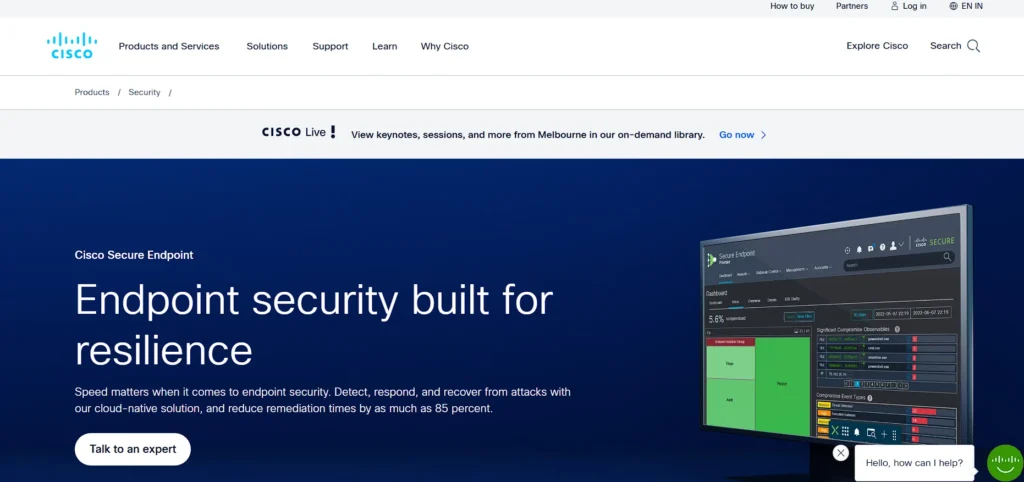
Cisco Secure Endpoints, or AMP to the Endpoints, is an effective Endpoint Protection Software service that is used to offer constant surveillance and threat identification. It employs best-in-breed analytics and threat intelligence to detect suspicious activity on endpoints. The platform provides profound insight into the activity of the endpoints, thus allowing security teams to probe into incidents in an efficient manner.
The solution offers several operating systems and deployment models. Cisco also focuses on intelligence distribution of threats to enhance detection. Real time notifications enable the response of teams to emerging threats. Secure Endpoint is an appropriate option in case of companies that want to be highly integrated with network security. Its management is web based and it makes administration easy. The platform improves security stance in general because it integrates prevention, detection, and response into a single solution.
Key Features:
- On-going endpoint monitoring and analytics.
- Advanced threat intelligence unification.
- Automated endpoints isolation features.
- Cloud-based centralized management.
- Protecting endpoints on a cross-platform basis.
- The combination with Cisco security ecosystem.
- Comprehensive crime investigation instrumentation.
Pricing:
- Essential: $6.75/ month
Best For:
- Companies with Cisco security and network products.
14. Malwarebytes endpoint protection
Malwarebytes Endpoint Protection is aimed to offer easy but efficient endpoint protection against ransomware and malware. It is concerned with quick identification and elimination of threats on the basis of behavioral analysis. It is easy to use and manage as the platform has a centralized management system via a cloud console. Malwarebytes focuses on the least amount of system impact, which makes sure endpoints are not brought down.
Malwarebytes offers understandable reporting and notifications to support security teams. It provides various operating systems and remote endpoints. The platform provides the necessary security to companies that have a small security budget. Its usability and performance oriented nature endears it to smaller organisations.
Key Features:
- Malware based on behavior detection.
- Ransomware security features.
- Lightweight endpoint agent
- Distributed cloud management console.
- Threat remediation that is automatic.
- Real time alert and reporting.
- Cross platform endpoint support.
Pricing:
- Standard: ₹706.62/ year
Best For:
- Small businesses require protection of point-end services.
15. Webroot Endpoint Protection
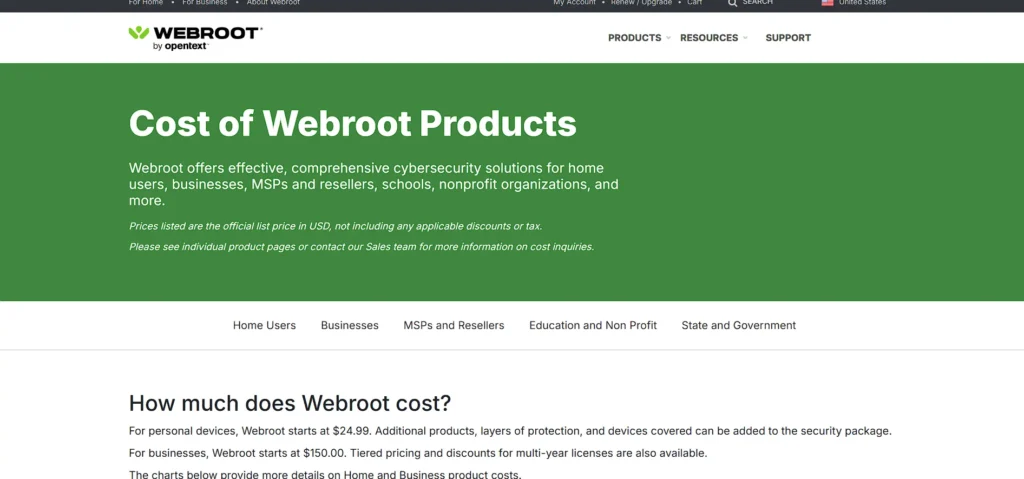
Webroot Endpoint Protection is a security tool and a reliable Endpoint Protection Software that offers fast and lightweight endpoint protection on a cloud platform. It applies behavioral analysis and real-time threat intelligence to identify malicious activities. The small size of the agent used by Webroot has little effect on system performance. The platform offers centralized management via a cloud console, making it easy to monitor and control.
Webroot puts a high premium on quick threat detection and rollback. It is compatible with various operating systems and remote connections. The solution is simple to implement and administer, which is why it fits in smaller IT groups. Webroot also constantly updates threat intelligence as a way of safeguarding against new risks. It is fast and simple and provides effective endpoint security without complexities.
Key Features:
- Endpoint protection architecture Cloud-based.
- Lean agent that consumes few resources.
- Threat intelligence feeds of real-time data.
- Threat detection behavioral analysis.
- Single web-based cloud management control.
- Quick threat remedial and rollback.
- Remote and mobile endpoint support.
Pricing:
- Webroot security for chromebook: $24.99/ 1device
Best For:
- Smaller to medium sized organizations that focus on performance.
Comparison Table of Best Endpoint Protection Software
| Software Name | Deployment Type | Key Strength | AI / Behavior Analysis | Best For |
|---|---|---|---|---|
| CrowdStrike Falcon | Cloud-native | Real-time threat hunting & EDR | Yes | Large enterprises |
| Microsoft Defender for Endpoint | Cloud-based | Deep Microsoft 365 integration | Yes | Microsoft-centric organizations |
| SentinelOne Singularity | Cloud-native | Autonomous threat response | Yes | Mid to large businesses |
| Sophos Intercept X | Cloud-managed | Strong ransomware protection | Yes | SMBs focused on ransomware |
| Trend Micro Apex One | Cloud / On-prem | Multi-layered security | Yes | Flexible deployment needs |
| Bitdefender GravityZone | Cloud / Hybrid | High performance, low impact | Yes | Performance-focused teams |
| VMware Carbon Black | Cloud-based | Advanced threat visibility | Yes | SOC & security teams |
| Palo Alto Cortex XDR | Cloud-native | Cross-platform threat correlation | Yes | Large enterprises |
| ESET PROTECT | Cloud-based | Lightweight protection | Partial | Small to mid-sized businesses |
| McAfee Endpoint Security | Hybrid | Traditional layered defense | Partial | Enterprises using McAfee |
| Kaspersky Endpoint Security | Cloud / On-prem | Balanced protection | Yes | Mixed IT environments |
| Check Point Harmony Endpoint | Cloud-based | Zero-trust threat prevention | Yes | Check Point users |
| Cisco Secure Endpoint | Cloud-based | Network-integrated security | Yes | Cisco ecosystem users |
| Malwarebytes Endpoint | Cloud-based | Simple & fast malware removal | Partial | Small businesses |
| Webroot Endpoint Protection | Cloud-native | Ultra-lightweight agent | Yes | SMBs prioritizing speed |
Conclusion
The use of endpoint protection software has turned into an indispensable condition in the modern world of cybersecurity. The network perimeter has vanished as the organizations transition to cloud-based networks, work remotely, and bring their own devices. Cyberattacks are not loud and conspicuous anymore; they are covert, behavioral and meant to look like a normal user activity. It is the initial and most essential level of defense which is endpoint protection.
The modern endpoint protection platforms are much more than just the basic antivirus. They are characterized by real-time visibility, AI-based threat detection and automatic response and unified management of all devices. Regardless of the type and size of an organization, being it small, mid-sized or enterprise-level, the right endpoint protection solution may assist to reduce the risk of breaches, reduce downtime and enhance the overall security efficiency.
With the knowledge of type of endpoint protection, their advantages, and the best solutions in the market, organizations are able to make great decisions based on the needs of security, their infrastructure, and future expansion. The current threat environment is constantly changing, and a business must invest in the appropriate endpoint protection software, which is not merely a matter of security, but business continuity and trust.
FAQs
1. What is Endpoint Protection Software?
A cybersecurity tool is the endpoint protection solution which defends computers, including laptops, desktops, servers, and mobile devices, against cyber threats by detecting and monitoring them centrally.
2. What is The Difference Between Endpoint Protection And Antivirus?
Viruses Antivirus pays significant attention to the already known malware whereas endpoint protection incorporates sophisticated detection, behavioral profiling, threat discovery and automated response.
3. Can Small Businesses Be End Point Protected?
The small firms are often targeted because they have less protection and endpoint protection can be used to avoid the expensive breaches.
4. Is Endpoint Protection Effective With Remote Workers?
Yes. The current cloud-native systems secure the devices even when they are not connected to the network or when they are not in the office.
5. What Is EDR And what Endpoint Protection?
EDR (Endpoint Detection and Response) assists in identifying, researching and reacting to threats on a real-time basis.