
The artificial intelligence integration into the study tools has brought about a revolutionary change in the digital learning environment. Although the old flashcard programs fulfilled their role, the students now require more interactive, customized courses that would adjust accordingly to their learning habits and styles.
The use of Quizlet as digital flashcards has taken a firm grip in the student communities worldwide and has become a household name as of the time of this writing. The fact that it is also becoming more dependent on paid subscriptions to use its best features, does not incorporate AI into its product quite well, or have an expansive range of uses in its free version, however, has made many learners seek more palatable options to use. Students have been affected by the emergence of paywalls, especially since they require complete research tools and cannot afford to subscribe to higher plans.
This post tells about 10 superior Free Quizlet Alternatives, which will use the strength of artificial intelligence to make your learning even more powerful. These Free Quizlet Alternatives promise innovative tools, including intelligent flashcard production, customized study plans, and learning algorithms, all without the expense models that have been standard in traditional exam platforms.
Why Look Beyond Quizlet?
Increasing Paywalls and Limited Access
Quizlet restricts access to the test mode, whereas some other platforms can give students unlimited access to the practice tests developed by the AI. The transformation that the platform has undertaken to shift to premium subscriptions has erected an obstacle that blocks the students who require the full-featured features of studying. The key features, such as enhanced studying patterns, customized practice exams without any limitations, and analytical reports, are restricted by the payment procedure now, and it is very difficult to explore the power of digital studying as a student who wants to study but has a limited budget.
Also Read: Best Homeworkify Alternatives for Students
Need for More Interactive and AI-Integrated Tools
The modern students demand that their learning materials be intelligent and responsive. Aged, stagnant question-and-answer flashcards no longer feel modern when compared to AI-driven system capabilities to create custom content, alter difficulty options on the fly, and give intelligent responses. The current students have the advantage of using the tools that may help them observe their learning patterns and essentially set up the study sessions to be most effective.
Desire for Subject-Specific and Feature-Rich Platforms
Different subjects require different learning approaches. Although Quizlet is a universal tool, there are so-called custom options that create a unique experience depending on specialized areas such as medicine, language learning, or technical subjects. Their target subjects have special needs, and these platforms consider such learning needs and provide specific capabilities to handle them.
Better Collaboration and Personalization Options
There is more collaboration in the learning process as students contribute their resources, develop group study sessions, and learn through community-generated content. Most of the alternatives to Quizlet have quite impressive features promoting collaborative learning and also offer advanced customization capabilities that support the learning styles, personal preferences, and rates of different people.
Top 10 Free Quizlet Alternatives for Studying With AI
1. Anki
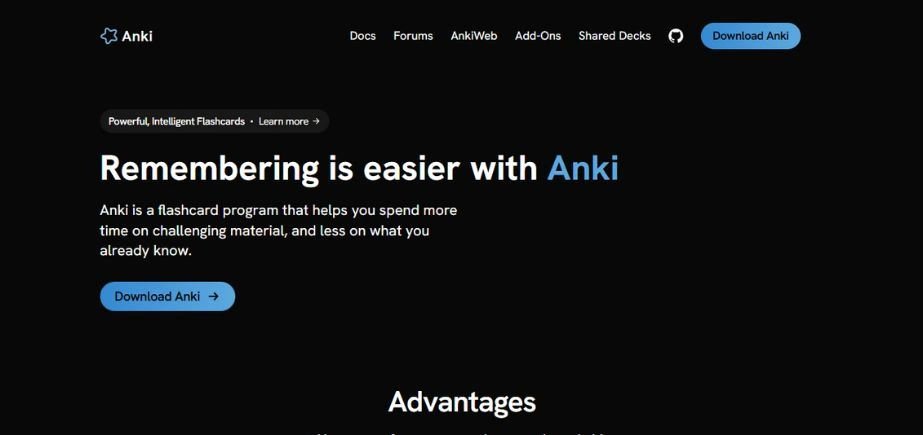
Anki is an all-purpose spaced repetition flashcard program that will help learners remember something over long periods of time. It is most suitable when one wants to learn or master a complicated subject, such as languages, the medical field, or law. Highly customizable, it supports images, audio, and community-made decks. It also has a minimal interface, but one that is focused on efficiency rather than beauty. The beauty of Anki is that a scientist has already tested its memory algorithm, and it has gained popularity among students with a preference for rich and accurate study habits.
Key AI-Powered Features:
- Intelligent spaced repetition algorithm that adapts to your memory patterns
- AI-powered card scheduling based on performance analytics
- Machine learning-enhanced difficulty adjustment
- Automated card generation through third-party AI integrations
- Smart statistics and progress tracking with predictive analytics
Pros:
- Completely free and open-source with unlimited cards and decks
- Highly customizable with extensive add-on support for AI features
- Proven spaced repetition algorithm backed by cognitive science research
- Cross-platform synchronization across all devices
- Large community with millions of shared decks
Cons:
- Steep learning curve for new users
- Interface can feel outdated compared to modern alternatives
- Requires technical knowledge to fully utilize AI add-ons
Ideal User:
Serious students, medical students, language learners, and anyone committed to long-term retention through spaced repetition.
2. Brainscape
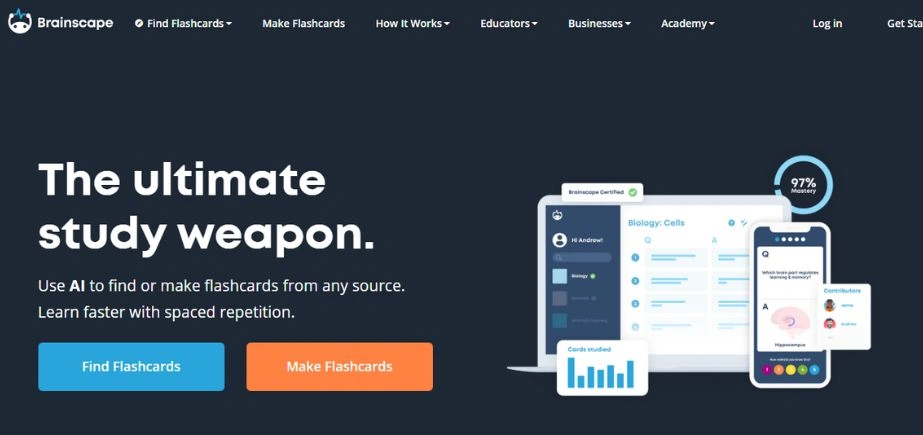
Brainscape involves intellectually adaptive repetitions in which the frequency rate of the flashcards is determined by the confidence level in the concepts being tuned. All audiences can access it, and the interface is intuitive, with a library of millions of shared decks. Brainscape also allows collaborative studying and performance tracking. It combines the scientific method of learning with an engaging user interface and is ideal for learning a new language or for company employee training. The platform also has web and mobile applications that can be easily accessed.
Key AI-Powered Features:
- AI tools for ‘Summarize from Content’ that convert class materials into flashcards automatically
- Confidence-based repetition algorithm that adapts to your self-assessment
- AI-generated flashcards from uploaded documents and notes
- Smart scheduling that optimizes review timing based on cognitive science
- Personalized study recommendations based on performance data
Pros:
- Clean, intuitive interface with modern design
- Strong mobile apps with offline functionality
- Collaborative features for sharing and studying with others
- Expert-created content available across various subjects
Cons:
- Advanced AI features require premium subscription
- Limited customization compared to open-source alternatives
- Smaller community compared to Anki
Ideal User:
Students who prefer polished interfaces, collaborative learners, and those studying popular academic subjects.
3. RemNote
RemNote synthesizes note-taking with spaced repetition to form an effective, all-in-one learning environment. Any note or idea can be converted to a flashcard in seconds, so you can memorize it as you go through your course material or while studying. It is common with learners in medical and academic subjects because it focuses on meaning, rather than memorization. RemNote also allows linking, tagging, and tree-like thinking, providing a network of knowledge. It is especially useful to those who like orderly, knowledge-based retrieval.
Key AI-Powered Features:
- Automatic flashcard generation from hierarchical notes and concepts
- AI-powered document summarization and key concept extraction
- Image occlusion flashcards for visual content from anatomy to geography
- Smart linking and relationship mapping between concepts
- AI-enhanced search and retrieval of related information
Pros:
- Unique integration of note-taking and spaced repetition
- Powerful knowledge management with bidirectional linking
- PDF annotation with automatic flashcard creation
- Strong academic and research-focused features
Cons:
- Complex interface that requires significant learning investment
- Limited mobile app functionality compared to desktop
- AI features are still developing compared to specialized platforms
Ideal User:
Graduate students, researchers, medical students, and anyone who needs sophisticated knowledge management combined with active recall.
4. StudySmarter
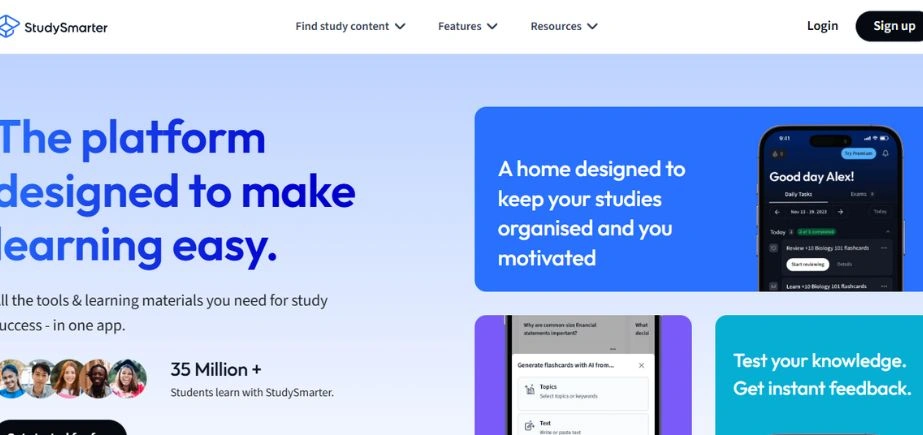
StudySmarter is a complete learning service with flashcards, summaries, study plans, and performance analytics. It is targeted at school and university students and assists them in structuring their studying effectively using collaborative tools and AI summaries. There is a variety of flashcards that can be built or can be reached out to. It also offers scheduling features to manage study sessions. Whether you like to self-learn, study before an exam, or do group work, StudySmarter is a convenient, all-in-one platform that will be useful in any academic setting.
Key AI-Powered Features:
- AI-generated flashcards from uploaded study materials
- Smart study planner that creates personalized schedules
- Automated quiz generation from notes and textbooks
- AI-powered progress tracking and performance analytics
- Intelligent content recommendations based on study patterns
Pros:
- Comprehensive platform combining multiple study methods
- Strong collaboration features for group study
- Intuitive interface designed for students
- Integration with popular learning management systems
Cons:
- Some advanced AI features require premium subscription
- Can feel overwhelming with its many features
- Newer platform with smaller community compared to established alternatives
Ideal User:
High school and university students who want an all-in-one study solution with strong collaborative features.
5. Memrise
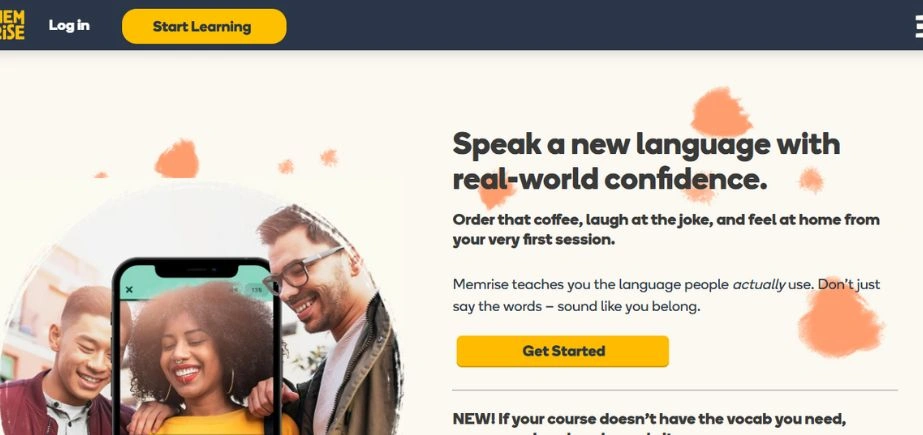
Memrise is a gamified app that helps you learn a language by watching real videos in the world and applying spaced repetition and quizzes to memorize the vocabulary. It will be best suited to learners who like an interactive and entertaining style of learning and who deal with conversational fluency and do not rely on rote memory practice. Memrise offers thousands of user-generated courses across many languages. It has an aesthetic interface and a mobile-first experience. As it has a visually attractive interface and mobile-first interaction, it is ideal for casual learners and travelers who need to develop practical skills in the shortest period of time and be motivated to train daily with the help of gamification.
Key AI-Powered Features:
- AI-powered pronunciation feedback and speech recognition
- Personalized learning paths based on performance data
- Smart review scheduling optimized for long-term retention
- Automated difficulty adjustment based on user progress
- AI-generated contextual examples and usage scenarios
Pros:
- Excellent for language learning with native speaker videos
- Gamified experience that keeps users engaged
- Strong mobile apps with offline functionality
- Large community with extensive course library
Cons:
- Primarily focused on language learning, limited for other subjects
- Advanced features and full courses require subscription
- Less customizable than general-purpose flashcard apps
Ideal User:
Language learners, students studying vocabulary-heavy subjects, and those who prefer gamified learning experiences.
6. Notion + AI
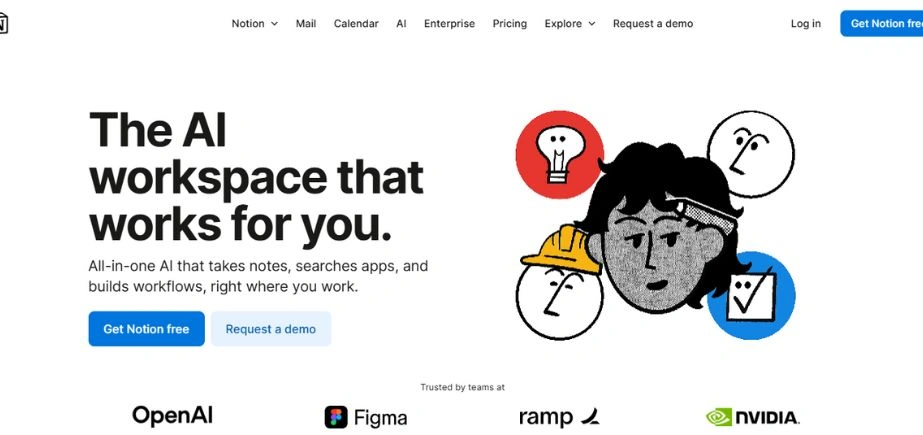
Notion combined with AI turns the process of note-taking and creating content into a type of smart, personalized learning. Although Notion is not a conventional flashcard program, you can create the exam preparation tool of your choice by either utilizing templates or creating your own database. AI helps summarize notes, generate questions, and streamline workflow. It is also convenient for those learners who want to personalize their learning space. Notion is perfect when used by students, researchers, or professionals ready to have a flexible tool with rich media support and integrations.
Key AI-Powered Features:
- AI-powered content generation for summaries and study guides
- Automated flashcard creation from notes and documents
- Intelligent organization and tagging of study materials
- AI-assisted writing and editing for improved note quality
- Smart templates that adapt to different subjects and study methods
Pros:
- Incredibly flexible platform that adapts to any study workflow
- Powerful database features for organizing complex information
- Collaboration tools for group projects and study sessions
- Integration with multiple productivity tools and services
Cons:
- Requires significant setup time to create effective study systems
- AI features are limited in the free plan
- Can be overwhelming for users who just want simple flashcards
Ideal User:
Organized students, graduate researchers, and those who want to combine comprehensive note-taking with study tools.
7. Quizizz
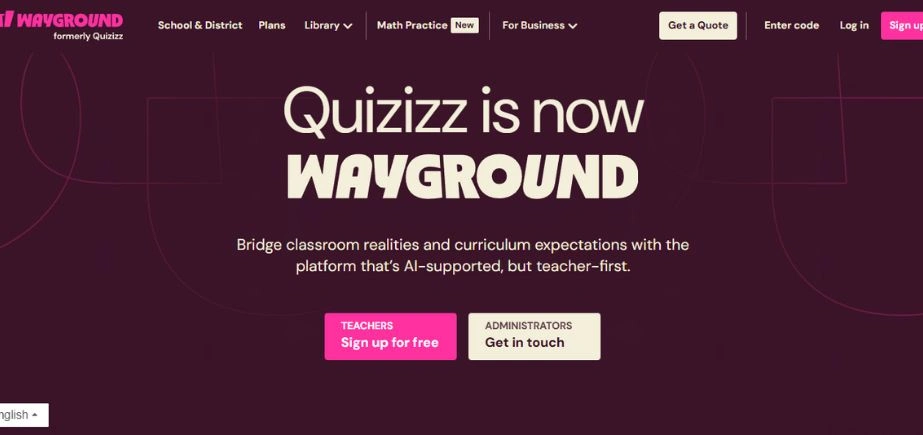
Quizizz is an interactive learning software that can be used in a classroom and provides gamified quizzes and flashcards, as well as live multiplayer quizzes. The educational materials can be created or imported by teachers, and the students can learn at their own pace using interesting visuals and get feedback instantly. It supports homework, assessments, and class competitions. Active recall is encouraged in a fun environment, which makes Quizizz ideal in a school environment. Its analytics tools also help educators track performance. It is fun, and repeat learning will be instructed via a web and mobile application
Key AI-Powered Features:
- AI-generated questions from uploaded content and materials
- Adaptive quiz difficulty based on student performance
- Intelligent analytics and progress tracking
- Automated feedback and explanation generation
- Smart question recommendations based on learning objectives
Pros:
- Highly engaging gamified learning experience
- Excellent for group study and classroom use
- Strong mobile optimization and user-friendly interface
- Large library of pre-made quizzes across various subjects
Cons:
- Focus on quizzes rather than traditional flashcard-style learning
- Advanced AI features require premium subscription
- Less suitable for individual long-term retention compared to spaced repetition systems
Ideal User:
Students who prefer interactive group learning, teachers creating engaging assessments, and those who learn better through competitive elements.
8. Flashcards.ai
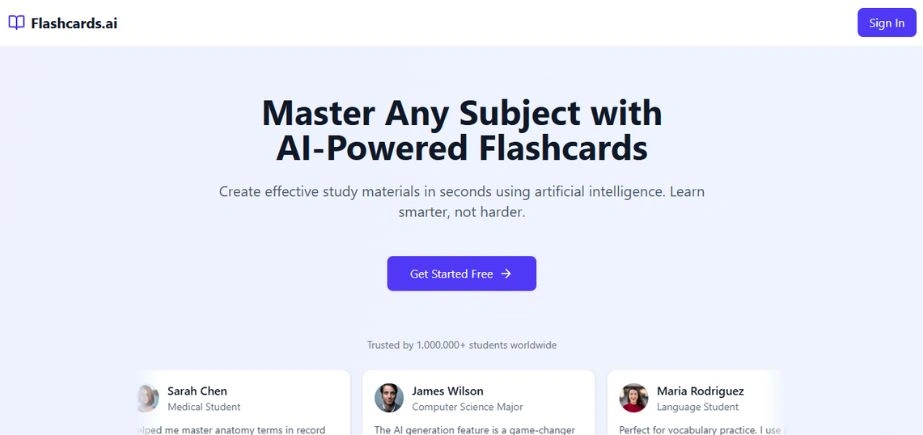
Flashcards.ai is a simple and low-feature flashcard application to help people learn with the help of spaced repetition. In addition, you will be able to easily build decks, import the content, and look over the cards depending on the witnessed mastery of the topic. The app is simple, and it does not allow users to get distracted, but at the same time, it helps them to learn effectively. It can be applied to students and self-learners in particular who do not want to get lost in the functionality of more deep-featured systems.
Key AI-Powered Features:
- Advanced AI flashcard generation from any text or document
- Natural language processing for context-aware question creation
- Intelligent spaced repetition with machine learning optimization
- AI-powered difficulty assessment and adjustment
- Automated study session recommendations based on performance patterns
Pros:
- Cutting-edge AI technology specifically designed for flashcard learning
- Minimal manual work required for creating comprehensive study sets
- Modern interface with focus on AI-enhanced features
- Rapid content processing and flashcard generation
Cons:
- Newer platform with limited community and shared content
- Heavily dependent on AI, which may not suit all learning preferences
- Premium features required for advanced AI capabilities
Ideal User:
Tech-savvy students, those with large amounts of text-based study material, and learners who want minimal manual flashcard creation.
9. Knowt
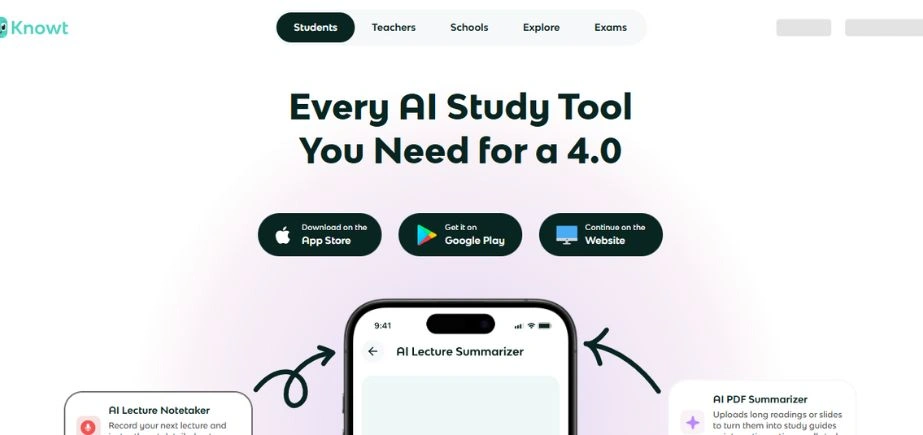
Knowt is a single-entry platform that provides flashcards, note-taking, and quizzes. Its best feature lies in its capacity to automatically convert your notes or documents that are uploaded into flashcards and quizzes ready to study. It supports spaced repetition and provides detailed progress tracking. Knowt is optimised with the idea in mind that it makes it easy to revise the content and recall it more actively. It is also able to use individual and group study abilities. It is time-efficient and has smart AI capabilities, which make studying easier, mainly for high school and college students.
Key AI-Powered Features:
- AI-powered adaptive learning similar to Quizlet Learn
- Unlimited AI-generated practice tests and study sessions
- Smart flashcard creation from notes and study materials
- Personalized study recommendations based on performance data
- AI-enhanced spaced repetition with optimized review scheduling
Pros:
- Completely free access to features that cost money on other platforms
- Direct alternative to Quizlet with familiar interface
- Unlimited practice tests and study sessions
- Strong focus on student accessibility and affordability
Cons:
- Smaller content library compared to established platforms
- Newer platform with developing feature set
- Limited advanced customization options
Ideal User:
Budget-conscious students, those seeking Free Quizlet Alternatives, and learners who need unlimited access to practice tests.
10. Obsidian + AI Plugins
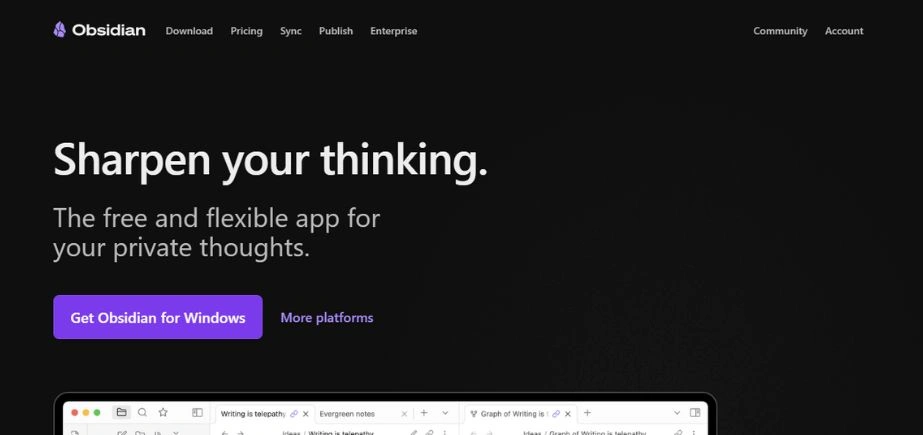
Obsidian is a note-taking program that supports markdown and is used by deep learners and researchers. It transforms into a mighty study assistant that, when supplemented with AI plugins, can generate flashcards, summarize notes, and find knowledge gaps. People are able to link notes within a knowledge graph where they may learn contextually. AI tools bring automation and knowledge, which is best suited for long-term memory development. Obsidian with AI works best with users who need comprehensive control over their knowledge base and processes, although they need to learn it first.
Key AI-Powered Features:
- AI-powered flashcard generation through spaced repetition plugins
- Intelligent note linking and concept mapping
- AI-assisted content creation and summarization
- Automated review scheduling with machine learning optimization
- Smart search and knowledge retrieval across your entire knowledge base
Pros:
- Extremely powerful and customizable through plugins
- Owns your data locally with complete privacy control
- Strong community developing innovative AI integrations
- Combines comprehensive note-taking with advanced study features
Cons:
- Requires technical setup and configuration
- Steep learning curve for non-technical users
- AI features depend on third-party plugins and services
Ideal User:
Power users, researchers, graduate students, and those who want complete control over their study environment.
Comparison Table Between Free Quizlet Alternatives
| Tool | Key AI Features | Offline Access | Collaboration | Best For | Free Plan Limits |
| Anki | Adaptive SRS algorithm, AI add-ons | Full offline support | Community decks | Long-term retention | Unlimited (desktop) |
| Brainscape | AI flashcard generation, confidence-based learning | Limited offline | Strong collaboration | Modern interface lovers | Basic features only |
| RemNote | Auto-flashcard from notes, document analysis | Full offline sync | PDF collaboration | Knowledge management | Unlimited core features |
| StudySmarter | AI study planner, automated quizzes | Basic offline | Group study features | All-in-one solution | Limited AI features |
| Memrise | Speech recognition, personalized paths | Mobile offline | Community courses | Language learning | Basic courses access |
| Notion + AI | Content generation, smart organization | Offline sync | Real-time collaboration | Comprehensive workflows | Limited AI usage |
| Quizizz | AI question generation, adaptive difficulty | No offline | Classroom integration | Interactive learning | Basic quiz features |
| Flashcards.ai | Advanced NLP, automated creation | Limited offline | Basic sharing | AI-first approach | Monthly usage limits |
| Knowt | Free AI learning, unlimited tests | Basic offline | Community sharing | Budget-conscious users | No major restrictions |
| Obsidian + AI | Custom AI integrations, smart linking | Complete offline | Plugin-based | Power users | Core app is free |
How to Choose the Right AI Study Tool
Based on Study Goals
Your learning objectives should drive your platform choice. Provided that you are interested in long-term retention in the first place and are willing to go through a learning curve, the effectiveness of the spaced repetition algorithm Anki has proven to be incomparable. RemNote offers just the right balance between comprehensive knowledge management that incorporates note-taking and that which involves active recall. When students are training through high-stakes exams, they should rely on the confidence approach in Brainscape, whereas language learners must be limited to the Memrise specialized features.
Device and Platform Compatibility
Consider your primary study devices and internet availability. When you need to study often offline, or you have a poor internet connection, you should focus on selecting tools with a powerful offline capability, like Anki or Obsidian. It is advisable to emphasize mobile-friendly programs such as Quizizz or Memrise to mobile-first students. The use of cross-platform synchronization is essential when you frequently change between desktop and mobile devices.
Preferred Input Type
The preferences you have concerning content creation will make a huge difference in choosing the tool that is best suited to your requirements. When you possess large bodies of text-based content (books, lecture notes, etc.), you can use AI-driven technology such as Flashcards.ai or Brainscape to automatically create study flashcards. The image occlusion functions of RemNote are a consideration for visual learners who have to use diagrams or pictures. The pronunciation functions of Memrise will be invaluable to those who respond better to voice-type learning.
Need for Integrations
Consider your existing study ecosystem and workflow requirements. Learners who have already adopted the notion as an organizational tool will be able to use AI parameters in their studies without training in new systems. Although it is seen as advantageous to those in a classroom setting, users who value research may find an advantage in using Quizizz because of its educational integrations, whereas Obsidian may be more suited due to its vast plugin ecosystem, which can also interact with reference managers and academic databases.
Also Read: Best Chegg-Like Websites to Earn Money in India
Conclusion
The field of AI-based learning tools has revolutionized the way we learn and remember things fundamentally. Such brilliant platforms help to prove the idea that productive study support tools do not have to be accompanied by significant subscription prices and functionality restrictions. Whether it includes Anki, which has been scientifically validated with spaced repetition, or Notion, which provides a complete workflow management experience, there are plenty of reasons to choose from the countless tools with their specific benefits based on learning styles and academic requirements.
The introduction of artificial intelligence to education devices can be considered a technological breakthrough, but it is also a democratization of individualized education. The capabilities that previously could be enjoyed only by paying high subscription fees or paying special tutors are now accessible to every student who has access to the internet. The flashcard creation using artificial intelligence, adaptive learning algorithms, and individual learning paths evens the playing field between the learners, independent of their economic background.
The trick to gaining the most out of learning is to experiment and to get the optimal fit that suits your needs. There is nothing wrong with testing various platforms, especially when many students practice combining them: some find it productive to use both tools to break it up, so, e.g., Obsidian can be used to take detailed notes and Anki to review material using a spaced repetition technique. The time costs spent in finding out these options are worth the rewards of having gained efficiency in our learning process and academic success.
Due to the further development of AI technology, more advanced features will be introduced in the free study tools. The next generation of learning is smart, contextual, and more open. Using the following list of AI-based alternatives to Quizlet, you are not only finding a free tool to study but also entering the next stage of education, where individualized learning is based on the capabilities of the artificial intelligence that can support the learning process of any student.
FAQs
1. Why should I consider alternatives to Quizlet?
Although Quizlet is extremely popular, other users would want more customization, spaced repetition options, AI, and/or a reduction in paywall restrictions. Some alternatives may have more control over study workflows, have deeper learning tools, or collaborative features.
2. Which Quizlet alternative is best for spaced repetition?
Anki, RemNote, and Flashcards.ai are most suitable to use in spaced repetition and, as such, are perfectly fit for long-term storage of information, particularly in intricate topics, such as medicine or language learning.
3. Are there Free Quizlet Alternatives with no hidden limits?
Yes. Anki (open-source), Flashcards.ai, and Knowt are some of the good free-tier options that provide valuable functionality. Others can be rather poor in feature set in free versions, yet they are very useful to some people.
4. Can I import my Quizlet flashcards into these alternatives?
Lots of websites, such as Anki, Brainscape, and Knowt, can handle Quizlet imports through a CSV file or integration support, which may allow you to move all the decks you already have and not have to start over.
5. Which alternatives support collaborative or classroom learning?
StudySmarter, Quizizz, Knowt, and Brainscape provide classroom collaboration tools and enable students to group decks, complete quizzes, and monitor progress as a group. These are great for group study or teaching environments.